Understanding the Knox Font Family: A Practical Look at Its Design, Strengths, and Use Cases
When selecting a typeface for a project that needs to evoke a specific era or mood, the choices can feel overwhelming. Many fonts promise authenticity, but few deliver the combination of character, flexibility, and practical utility that the Knox font family offers. Designed as a set of six distinct weights with a shared mono baseline and an array of decorative treatments, Knox draws direct inspiration from American western culture and tattoo artistry. This makes it a particularly compelling option for designers working on vintage-themed projects. But like any tool, its value depends entirely on how well it aligns with your specific goals, audience, and medium.
The purpose of this article is to help you evaluate Knox on its own terms while also understanding where it fits within the broader landscape of vintage-inspired typefaces. Rather than pushing a single answer, we will explore what makes Knox distinct, where it excels, where it has limitations, and how you can decide if it is the right choice for your next project. Whether you are a graphic designer, a branding professional, or someone exploring type options for personal work, a thorough and balanced assessment will serve you better than a quick yes or no.
What Knox Offers as a Typeface Family
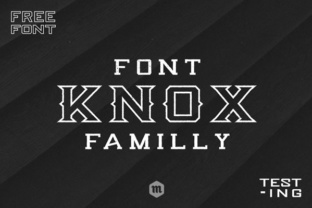
At its core, Knox is not a single font but a family of six. Each member shares a monospaced structure, meaning every character occupies the same horizontal space. This uniformity lends itself well to certain kinds of layouts, especially those that require a clean, rhythmic alignment. The mono weight across the family ensures consistency, but the real distinguishing feature lies in the decorations. Different versions of Knox include ornamental elements such as spurs, stars, banners, and other flourishes that directly reference western Americana and tattoo flash art.
These decorations are not mere afterthoughts. They are integral to the personality of the font. When you use a decorated weight of Knox, you are not simply applying a standard serif or sans-serif and hoping it reads as vintage. You are working with a typeface that has been deliberately crafted to carry the visual language of hand-painted signs, saddle leather, and old-school tattoo parlors. This makes Knox significantly more specific in its associations than a general-purpose vintage font that might borrow loosely from Victorian or Art Deco styles.
The mono weight also introduces an interesting dynamic. Monospaced fonts are often associated with typewriters, coding, or industrial applications, but Knox reframes that mechanic uniformity through a decorative lens. The result is a typeface that feels both structured and expressive. It can anchor a design with consistency while still offering visual interest through its ornamental variants.
How Knox Compares with Other Vintage-Inspired Typefaces
To evaluate Knox fairly, it helps to consider the broader category of vintage-inspired fonts. This category includes everything from distressed serifs that mimic weathered wood type to elegant script fonts that recall mid-century advertising. Many of these fonts aim for a generalized nostalgic effect. They rely on worn edges, irregular spacing, or faded ink to create an aged look. Knox takes a different approach. Instead of simulating wear and tear, it builds its vintage identity through deliberate stylistic references to specific cultural artifacts: western signage, tattoo designs, and frontier-era ephemera.
This specificity is both a strength and a tradeoff. For a project that needs to feel authentically rooted in the American West or tattoo culture, Knox offers a level of cohesion that a more generic vintage font cannot match. The decorations are not random; they are chosen to reinforce the same thematic cues across different weights. If you are designing a logo for a craft distillery with a western theme, a poster for a rodeo event, or packaging for a small-batch leather goods brand, Knox can carry much of the visual storytelling on its own.
However, if your project requires a vintage feel that is less geographically or culturally anchored, Knox may feel too specific. A font that evokes old-world European typography or early 20th-century American advertising without western connotations might serve you better in that case. The key is not to ask whether Knox is a good font in an absolute sense, but whether it is the right font for the particular narrative you want to tell.
Another point of comparison lies in the decorative elements. Many vintage fonts offer a single style or perhaps a regular and bold weight. Knox provides six options with different levels of ornamentation, giving you more flexibility to dial the visual intensity up or down. This can be especially useful when you need a consistent type family across multiple applications, from a heavily decorated headline to a cleaner subheading or body text. The mono weight helps maintain a unified rhythm even when switching between decorative variants.
Strengths and Tradeoffs of Using Knox in Design Projects
One of the most immediate strengths of Knox is its ability to establish a strong sense of place and time. A design that uses a Knox weight with star or banner decorations instantly communicates a western or tattoo-inspired aesthetic without requiring additional illustration or iconography. This can reduce the overall complexity of a design while increasing its impact. For small businesses or independent creators working with limited budgets, a single carefully chosen typeface can do the heavy lifting of branding.
Another strength is the monospaced structure. While monospaced fonts are not always the most readable for extended body text, they can be highly effective for headlines, labels, short blocks of copy, and display applications. The consistent character width creates a grid-like alignment that feels intentional and crafted. In contexts such as signage, product labels, or posters where each letter needs to stand on its own, this uniformity is an asset.
However, there are tradeoffs to consider. The same decorative elements that give Knox its personality can also limit its versatility. If you try to use a heavily ornamented weight for a long paragraph, the details may become distracting rather than enhancing. The visual noise increases, and readability can suffer. This is not a flaw in the font itself, but it does mean that you need to be intentional about where and how you apply each weight. Using Knox effectively often requires a designer who understands hierarchy and can pair simpler weights with more ornate ones for balance.
Additionally, because Knox is so strongly tied to western and tattoo aesthetics, it may not age well in contexts that change over time. A brand that initially embraces a western look may later want to evolve toward a more contemporary or minimalist identity. Switching away from a typeface as distinctive as Knox can be more disruptive than moving away from a neutral font. This is a consideration worth making if you are choosing a typeface for an organization that may rebrand in the future.
Best-Fit Situations for Knox
Knox shines most brightly in projects where the visual theme is central and consistent. Some realistic examples include:
- Branding for western-themed businesses: A rodeo supply company, a ranchwear clothing line, or a western-style restaurant can use Knox to reinforce its identity at every touchpoint. The decorated weights work well for logos and signage, while simpler variants can handle menus, labels, and business cards.
- Tattoo studio identity: Given its inspiration from tattoo flash art, Knox is a natural fit for tattoo parlors or artists who want their branding to reflect the craft. The ornamental details echo the visual language of traditional American tattoo design.
- Event posters and flyers: For music festivals, craft fairs, or cultural events with a western or vintage theme, Knox can create immediate visual interest. The monospaced structure also makes it suitable for listing schedules or lineups in a clean, readable format.
- Packaging for artisanal products: Small-batch spirits, locally sourced foods, handmade soaps, and other artisanal goods often use vintage aesthetics to convey authenticity and craftsmanship. Knox can help reinforce that message without relying on stock imagery.
In each of these cases, the font is not just decorative. It is doing communicative work, telling the audience something about the product, service, or event before they read a single word. That is the mark of a well-chosen typeface.
When Another Option Might Serve You Better
Despite its strengths, Knox is not the answer for every vintage-themed project. Consider the following situations where you might want to look elsewhere:
- Long-form reading material: If your project involves substantial body text, such as a book, catalog, or detailed brochure, a monospaced decorative font is rarely the most readable choice. A more neutral serif or sans-serif designed for extended reading will serve your audience better, even if you use Knox sparingly for headlines.
- Contemporary or minimalist branding: Brands that aim for a clean, modern, or minimalist identity may find Knox too busy or thematically heavy. A simple geometric sans-serif or a restrained serif can achieve a timeless look without anchoring the design to a specific cultural reference.
- Culturally unrelated vintage themes: If your project evokes a European, Asian, or other non-American vintage aesthetic, Knox may feel out of place. Its references are specifically rooted in American western and tattoo culture. A typeface that draws from the relevant historical tradition will be more authentic.
- Digital-first applications with small text: Highly decorative typefaces often lose their detail at small sizes on screens. If your primary use is digital body text or mobile interfaces, a simpler font will ensure legibility. Knox is better suited to print or large-format display.
In these scenarios, the decision is not about the quality of Knox but about fit. A well-informed designer knows that choosing a typeface is an act of alignment between the font's inherent qualities and the project's requirements.
Practical Decision Factors for Choosing Knox
If you are currently evaluating Knox for a project, here are some factors to weigh:
- Thematic specificity: How closely does your project align with American western culture or tattoo aesthetics? The stronger the alignment, the more value Knox will add.
- Application scale: Will you use the font primarily for headlines and display work, or do you need it for body text? Knox works best in the former category.
- Brand longevity: Is this a short-term campaign or a long-term brand identity? The more permanent the use, the more carefully you should consider whether a very distinctive font will remain appropriate over time.
- Pairing flexibility: Do you have other typefaces in mind that will complement Knox without competing with its decorations? A neutral sans-serif or a simple slab serif can work well alongside it.
- Audience expectations: Will your audience recognize and appreciate the western and tattoo references, or might they interpret them differently? Knowing your audience helps avoid misalignment.
These questions do not have right or wrong answers. They are meant to guide your thinking so that your choice is deliberate rather than accidental.
Final Considerations for Making an Informed Choice
Knox is a distinctive and well-crafted typeface family that serves a specific set of design needs. Its six weights, monospaced structure, and thematic decorations make it a powerful tool for projects rooted in American western culture and tattoo-inspired aesthetics. When used in the right context, it can elevate a design by providing immediate visual personality and narrative depth. However, its specificity also means that it is not a universal solution. For projects that require a more neutral vintage feel, long-form readability, or cultural references outside the American West, other options may be more appropriate.
The best approach is to treat Knox as one option among many, evaluate it honestly against your project's unique requirements, and make a decision based on fit rather than trend or impulse. By doing so, you ensure that your choice serves the design, the message, and the audience in equal measure.