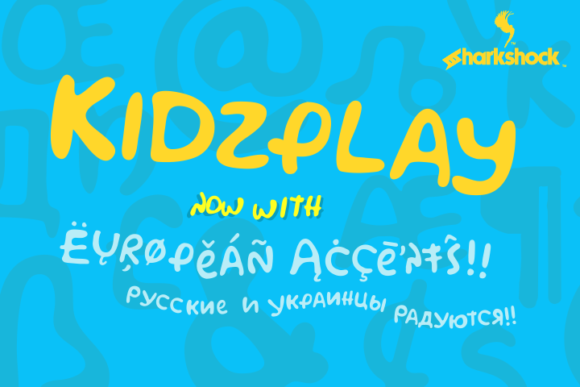
Kidzplay: A Classic Font Gets a Serious Facelift
After a decade of charming designers and educators, the beloved typeface Kidzplay returns with a thoughtful update. For anyone who has worked with children’s materials, games, or playful branding, the name likely sparks recognition. The original Kidzplay captured a hand-drawn, energetic spirit that felt perfect for young audiences. But ten years is a long time in digital design. Screen resolutions have improved, printing techniques have evolved, and expectations around typographic polish have shifted. The new version responds to all of that while preserving the warmth that made Kidzplay a go-to choice.
What changed? The short answer is almost everything — but with careful restraint. The curves have been smoothed out, giving each character a more natural, ink-like flow. This isn’t a radical overhaul; it’s a refinement. If you loved the original’s bounce and irregularity, you’ll still find that here, only now it feels deliberate rather than accidental. The Hello font lovers community has been asking for this kind of polish, and the update delivers exactly that.
What Makes the Updated Kidzplay Different?
The most visible improvement is in the quality of each glyph. Every character has been completely redrawn. Where the old version could feel slightly jagged at larger sizes or on high-resolution screens, the new Kidzplay flows smoothly. The curves are now consistent and rounded, mimicking the way ink bleeds slightly on paper. This makes the font more legible in print and on digital displays alike.
Kerning — the spacing between letter pairs — has been rebuilt from scratch. For anyone who has struggled with awkward gaps in display text, this is a meaningful upgrade. Titles, headlines, and short phrases now sit together naturally, reducing the need for manual adjustment. For busy designers or small business owners creating posters, this translates directly into saved time and cleaner final output.
- Completely redrawn glyphs – each letter feels intentional and polished
- Improved kerning – better spacing without sacrificing playfulness
- Extended character set – basic extended Latin, European accents, and Cyrillic support
- Ink-like appearance – smoother curves that work beautifully in print
For users who need to reach multilingual audiences, the addition of European accents and Cyrillic characters is a practical game-changer. A children’s book publisher creating editions for different language markets can now use one font across projects. A game developer localizing a mobile app for Eastern European players no longer needs to switch typefaces mid-stream. This single update simplifies workflows and ensures visual consistency.
Posters and Promotional Materials
Posters rely on big, expressive type that draws attention. Kidzplay’s new refined curves make it ideal for large print. School event flyers, library reading programs, and community theater productions all benefit from its friendly energy. The ink-like quality adds a tactile feel that complements matte paper or digital mockups. Because kerning is now tighter, words like “SUMMER” or “ADVENTURE” stay readable even at 72 points.
Game Interfaces and Branding
Whether you’re designing a mobile game for toddlers or a board game for families, Kidzplay brings the right tone. Its playfulness signals fun without looking chaotic. The updated glyphs ensure that UI elements like buttons, scoreboards, and dialogue boxes remain legible. For indie developers working with limited budgets, this font eliminates the need to commission custom lettering. It also supports the emotional context of games aimed at young children — friendly, approachable, and slightly whimsical.
Children’s Books and Educational Materials
Readability is critical in early reader books. Kidzplay’s open shapes and consistent stroke thickness help emerging readers decode letters quickly. The smoothed curves reduce visual noise, which is especially helpful for dyslexic or visually sensitive children. Educators creating worksheets, flashcards, or classroom displays will appreciate the extended Latin and accented characters. A Spanish-language alphabet poster, a French vocabulary card, or a Russian storybook can all use the same font without gaps.
Publishers will also value the fact that Kidzplay now works across more formats. Whether you’re laying out a printed picture book, an EPUB, or a PDF for remote learning, the clarity holds up. The update respects the need for both charm and function — a balance that many children’s typefaces struggle to achieve.
Who Benefits Most from This Update?
This version of Kidzplay is particularly useful for freelance designers who need versatile tools that cover multiple projects. Instead of buying separate fonts for posters, games, and books, you now have one that handles all those scenarios. The Cyrillic support alone can justify the update for anyone working with Russian, Ukrainian, or Bulgarian clients.
Small business owners running daycare centers, tutoring services, or creative workshops can also gain from Kidzplay. A consistent typeface across your website, signage, and print materials builds brand recognition. The playful tone feels authentic for kid-focused services without looking unprofessional.
Educators and bloggers who create free printables or classroom resources benefit from the extensive character set. No more substituting question marks for missing accented letters. No more noticing that a poster’s font lacks the ñ in “niño.” The update solves these small frustrations that collectively eat up time.
Even hobbyists — parents making birthday invitations, scrapbookers, or community event organizers — will notice the difference. The ink-like curves print beautifully on home inkjet printers, and the improved kerning reduces the chance of letter overlap in DIY projects.
Limitations and Considerations
No typeface is perfect for every job, and Kidzplay’s update does not claim to be. Its strength lies in informal, joyful contexts. If you’re designing a corporate annual report or a medical brochure, this is likely the wrong choice. The personality that makes Kidzplay great for a kindergarten poster would feel out of place in a legal document. Similarly, while the Cyrillic set is a welcome addition, it may not cover every rare character needed for specific scholarly works. Always preview the full character map for your target languages.
Some users might miss the raw, slightly uneven feel of the original Kidzplay. The new version is more polished, which is mostly a benefit, but if your project specifically calls for a hand-drawn, imperfect look, you may want to compare the old and new versions. The update does not invalidate the original — it simply offers a refined alternative that works better for modern production.
Practical Recommendations for Using Kidzplay
To get the most out of this refreshed typeface, consider pairing it with simple sans-serif fonts for body text. Kidzplay works well as a display face for headings while a clean companion like Open Sans or Lato handles paragraphs. Avoid mixing it with another playful font — let Kidzplay carry the personality alone.
For posters, use all caps or sentence case with generous tracking to emphasize the letterforms. For children’s books, stick with a size of at least 16 points for body text and ensure good contrast against the background. The ink-like quality shines on cream or off-white paper, mimicking the feel of vintage children’s books.
In digital projects, test the font at various screen sizes. While the smoothed curves improve readability on retina displays, some weights may appear heavier on low-resolution screens. Adjust your CSS font-weight accordingly.
Why This Update Matters After a Decade
Typeface updates often feel incremental — a few new weights, a couple of alternate glyphs. Kidzplay’s overhaul is more substantial because it addresses the core experience of using the font. The redrawn glyphs, rebuilt kerning, and expanded language support directly impact how designers and creators work. You spend less time adjusting spacing, less time hunting for compatible accents, and less time worrying about a font that looks great on screen but muddled in print.
For the Hello font lovers community, this feels like a homecoming. The old classic many relied on for children’s projects now meets the standards of modern typography. It remains approachable and fun, but it also feels considered. Whether you are designing a poster, a game interface, or a kid’s book, the new Kidzplay gives you a solid foundation without demanding constant micro-adjustments.
The best typefaces are the ones you can trust to work across contexts, languages, and media. After ten years, Kidzplay has earned that trust back — with a serious facelift that leaves its playful soul intact.