Sebasengan: A 10-Font Family Built for Mixing and Matching
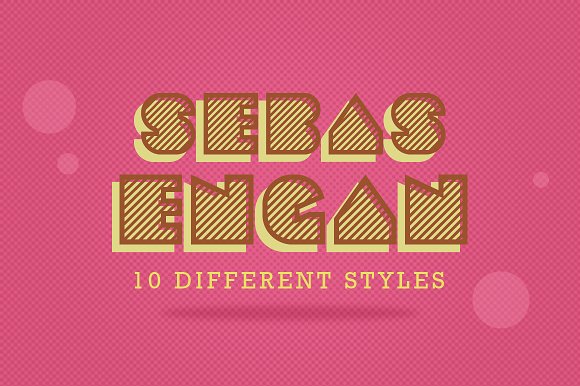
If you have ever browsed a font library hoping to find one typeface that can do everything—headlines, body text, logos, social graphics, packaging, and maybe even a handwritten note—you know how rare that unicorn really is. Most premium font families give you a few weights and maybe an italic. Sebasengan takes a different approach. It is a complete pack of ten distinct fonts, each with its own personality, designed to work together or stand alone.
This is not a single font with variations. It is a curated collection of styles that includes serif, sans serif, script, handwritten, and display fonts. The idea is simple: you get a toolkit, not just a tool. Whether you are building a brand identity from scratch or refreshing an existing project, having ten complementary styles at your fingertips changes how you approach design decisions.
What Sebasengan Looks Like and Why That Matters
Visually, Sebasengan strikes a balance between approachable and polished. The serif fonts carry a classic, slightly editorial weight—think magazine headlines or book covers where you want authority without stiffness. The sans serif options are clean and modern, ideal for web design or app interfaces where readability on screens is non-negotiable. The script and handwritten styles bring warmth and a human touch, which is often the missing piece in digital-first projects.
The overall personality of the Sebasengan family is confident but not loud. It does not scream for attention. Instead, it creates a quiet professionalism that works across both personal and commercial projects. The display fonts have enough character to anchor a logo or a poster, but they remain legible at smaller sizes, which is harder to find than most designers care to admit.
The Real Appeal: Versatility Without Chaos
What makes Sebasengan genuinely useful is how the ten styles relate to each other. They share enough structural DNA to feel cohesive when paired, yet each font has its own voice. You can use the serif font for a brand tagline, the sans serif for body copy on a website, and the handwritten style for pull quotes in a social media graphic—and it all still looks like it belongs to the same system.
For small business owners and entrepreneurs who cannot afford a full brand guidelines document, this kind of built-in consistency is a practical advantage. You are not guessing whether your headline font works with your paragraph font. The family was designed to mix and match, which eliminates a lot of guesswork.
Where Sebasengan Works Best Across Different Projects
If you are a blogger or content creator, you will appreciate how the Sebasengan fonts handle long-form reading. The serif and sans serif styles are both readable at standard body text sizes, which means your audience is not squinting or bouncing off the page. The handwritten font works well for short, personal notes or signature-style callouts within an article.
For marketers and publishers, the display and serif options are strong candidates for editorial design. Think of a digital magazine where you need a bold cover headline that also looks sophisticated. Sebasengan delivers that without tipping into trendy territory that will feel dated in two years. It is a commercial font that ages well.
Logo designers and brand strategists will find the most value in the script and display fonts. The script style has enough flourish to feel custom, but it is not so ornate that it loses legibility in small applications like social media avatars or favicons. The display fonts offer enough weight for monogram-style logos or wordmarks that need to stand out on packaging or merchandise.
Digital and Print: A Rare Balance
One of the hardest things to find in a font family is performance across both digital and print mediums. Sebasengan handles this well. The fonts render cleanly on screens without hinting issues, which matters for web design and app interfaces. At the same time, the same fonts hold up in print—business cards, brochures, product labels, and even larger formats like posters or banners.
Crafters and hobbyists who work with printable templates, invitations, or DIY branding projects will also find the handwritten and script styles approachable. They do not look overly formal, so they work for wedding invitations, personal stationery, or small-batch product labels where you want a handmade feel without sacrificing professionalism.
How Sebasengan Influences Readability, Hierarchy, and Brand Perception
Typography is rarely the hero of a good design, but it is almost always the culprit when a design feels off. Sebasengan helps you avoid that trap by giving you clear visual hierarchy options. The serif font naturally draws the eye in headings, while the sans serif recedes comfortably for body text. The script and handwritten fonts serve as accent voices—they signal something personal, a quote, a note, or a callout.
From a brand perception standpoint, using a consistent font family signals that you care about details. It may sound subtle, but when a visitor lands on your website and sees a headline font that matches the font on your product packaging and your social media graphics, they register that consistency as professionalism. It builds recognition over time without the audience even noticing why everything feels cohesive.
Readability is another area where Sebasengan shines. The letterforms are open and well-spaced, which reduces eye fatigue in longer reading sessions. This is especially relevant for bloggers, publishers, and anyone creating content that people actually read from start to finish. A font that works against readability is a liability. Sebasengan works with it.
Font Pairing Within the Family: Less Guesswork, More Confidence
One of the practical benefits of a multi-style font pack like Sebasengan is that you do not need to source a second typeface for contrast. The family itself provides built-in pairing options. For example, pairing the serif display font with the clean sans serif body font creates a classic editorial look. For something more casual, the handwritten style alongside the sans serif works well for lifestyle brands or personal blogs.
When you are testing font pairings, start with two styles that are visually distinct—one for headlines and one for body text. Then add a third for accents sparingly. Sebasengan encourages this modular approach. You are not forced to use all ten styles in one project. You pick the combination that fits the tone you need.
Practical Guidance for Choosing and Using Sebasengan
Before you commit to any font family for a professional project, evaluate how well it matches your content's voice. Sebasengan works best for brands and creators who want to be seen as modern yet grounded, approachable but not casual to the point of sloppiness. If your brand voice is ultra-corporate or highly experimental, there may be better fits. But for the vast middle ground—coffee shops, consulting firms, lifestyle blogs, online courses, product packaging, local businesses—Sebasengan hits a sweet spot.
When reviewing the included styles, pay attention to the script and handwritten fonts. These are often the differentiating factor in a font pack. If they feel too rigid or too loose, the whole family may not suit your needs. In Sebasengan, the script style has a natural rhythm that does not look robotic, and the handwritten font carries enough personality to feel authentic without being distracting.
Readability Considerations and Commercial Licensing
Always test fonts at the actual sizes you plan to use. What looks good in a preview at 72 points may not hold up at 14 points for body text. Sebasengan's serif and sans serif styles were designed with readability in mind, so they perform well at smaller sizes, but test it in your specific context. For digital use, check how the fonts render on different browsers and devices. For print, request a proof before a full run.
On the licensing side, Sebasengan is a commercial font pack, which means you need to verify the terms for your specific use case. If you are using it for client projects, logos, merchandise, or any revenue-generating work, confirm that the license covers commercial use. Most premium font packs do, but the details matter. A single commercial license typically covers one user or one project, so factor that into your budget if you work with multiple brands or clients.
Real-World Examples and Final Observations
Imagine a local coffee roaster launching a new blend. They need a logo, a label, a website, and social media templates. Using Sebasengan, the logo could use the display serif font for the brand name, the product description on the label could be in the clean sans serif, and a behind-the-scenes Instagram post could feature a quote in the handwritten style. Everything ties together without looking repetitive.
Or consider a freelance marketing consultant building a personal brand. A clean sans serif for the website body text, a serif for the case study headlines, and a script font for the email signature. Simple, professional, and coherent without needing a graphic design degree to pull off.
The Sebasengan font pack is not trying to be the loudest typeface in your library. It is trying to be the most useful. For designers, entrepreneurs, marketers, publishers, bloggers, crafters, and small business owners, that utility matters more than any single font style could. If you value consistency, flexibility, and a font that works across media without forcing you to become a typography expert, Sebasengan is worth a close look.