Peanut Butter Font Duo: A Practical Review and Evaluation
When evaluating display fonts for a branding, packaging, or editorial project, designers often look for typefaces that balance personality with versatility. The Peanut Butter Font Duo enters this space as a hand-drawn, playful pairing that offers both a solid main font and an outline companion. While the name may suggest novelty, the actual utility of this duo deserves a closer look—especially if you are trying to decide whether it fits your project’s specific needs.
What Is the Peanut Butter Font Duo?
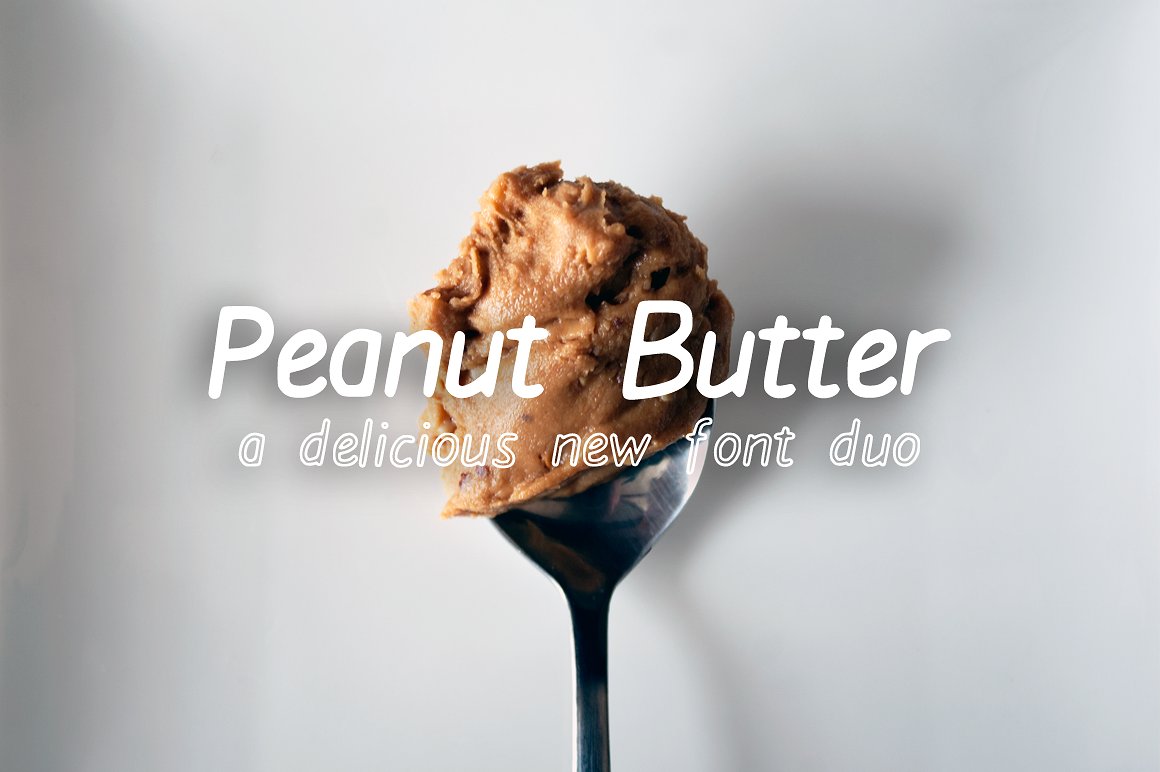
The Peanut Butter Font Duo is a set of two fonts designed to work together: Peanut Butter (the solid, regular weight) and Peanut Butter Outline (a matching outline version). Both fonts share a hand-lettered, organic style with a slightly rough, imperfect finish. They are not intended for long body text; instead, they function best as display fonts for headlines, logos, quotes, and short statements. The duo format gives you immediate pairing options without mixing fonts from different designers—each variant complements the other in thickness, proportion, and character shapes.
One key detail for anyone evaluating the duo: the fonts are typically offered in standard formats (OTF, TTF, WOFF) and include basic Latin character sets. Some versions may also support accented characters for Western European languages, but you should verify the character coverage if your project requires extended language support. The outline font is especially useful for layering effects over the solid version, which can create a stencil-like or hand-painted aesthetic without manual vector work.
Who Might Be Interested in This Font Duo?
Designers and creators looking for a font with a casual, welcoming, or homemade feel are the primary audience. Common use cases include:
- Food or beverage branding (cafés, bakeries, organic products)
- Children’s book covers or playful print materials
- Social media graphics that require a friendly, approachable tone
- Handmade goods packaging (soaps, candles, crafts)
- Event invitations, posters, or signage with a rustic theme
The Peanut Butter Font Duo appeals specifically to those who want to avoid overly polished or corporate-looking typefaces. If your project aligns with warmth, creativity, or simplicity, the duo may provide that human touch without requiring custom lettering.
Strengths and Practical Benefits
Immediate pairing convenience. Because the solid and outline forms are derived from the same base design, they layer and align nearly perfectly. This saves time compared to matching separate fonts from different families. You can set headlines in the solid version and add accent words in outline, or overlay the outline on a colored version of the solid for a multitone effect.
Consistent character proportions. Hand-drawn fonts from different sources often have inconsistent x-heights or baseline shifts. With the Peanut Butter Font Duo, both versions share the same metrics, which simplifies spacing and alignment. This consistency is especially helpful when using both fonts on the same line or in close proximity.
Distinctive texture. The irregular edges and varied stroke widths give the typography a tactile, letterpressed feel. In digital contexts, this can counteract the cold precision of vector graphics. For projects that aim to evoke nostalgia or authenticity, this texture is a benefit rather than a flaw.
Considerations and Tradeoffs
No font is perfect for every scenario, and the Peanut Butter Font Duo has several limitations worth weighing.
Limited glyph coverage. Most versions of this duo include only uppercase letters, lowercase letters, numbers, and basic punctuation. If you need extensive ligatures, stylistic alternates, or language support beyond Western European Latin, you may find the character set restrictive. Always check the included glyphs before purchasing or licensing.
Readability at small sizes. The rough edges that give the font its charm can reduce legibility when used at body text sizes. Even at 14–18 point, the uneven strokes may cause letters to blend together on screen or in print. The outline variant is even less readable at small sizes because the interior white space becomes narrow. Plan to use these fonts at 24 point or larger for headlines.
Limited stylistic range. The duo offers only two variants (regular and outline). There are no bold, italic, condensed, or expanded weights. If your design requires hierarchy within the font family (e.g., a bold subheading, a lighter lead-in), you may need to pair the duo with another font. That is common, but it means the duo does not fully replace a multi-weight family.
Subjectivity of style. The hand-drawn, slightly imperfect aesthetic is not universally appropriate. For corporate reports, formal invitations, or minimalist modern brands, the Peanut Butter Font Duo may feel out of place. The playful, messy quality works best when informality is intentional.
When Peanut Butter Font Duo Is a Strong Fit
The duo excels in scenarios where you need a quick, cohesive display solution with a warm personality. Consider it when:
- You are designing for a client in food, craft, or children’s markets and the brief calls for “friendly” or “handmade.”
- You want to create layered typography (solid + outline) without manual outlining in vector software.
- Your project is short-form: a logo, a poster headline, a social media graphic, or a single product label.
- You value time efficiency over custom lettering and need a ready-made pairing that is already balanced.
A typical strong use case is a bakery brand identity: set the business name in Peanut Butter solid, then use the outline version for a secondary tagline such as “fresh daily” underneath. The two forms echo each other without competing.
When Alternatives May Be Worth Considering
If your project demands more flexibility or professionalism, look elsewhere. Scenarios where an alternative font (or font pair) may be a better choice include:
- Long-form editorial or body copy. The duo is not designed for paragraph text. Choose a sturdy serif (like EB Garamond or Source Serif) or a legible sans serif (like Open Sans or Lato) instead.
- Multilingual projects. If you need Cyrillic, Greek, Vietnamese, or extensive accent characters, the limited Latin set may cause gaps. Verify coverage, or consider a more comprehensive hand-drawn font such as Museo Slab variant or Kalam.
- Minimalist or corporate branding. The rough texture may conflict with a clean, modern identity. A geometric sans serif or a monoline script would likely align better.
- Multiple weights for hierarchy. If you need thin, regular, bold, and black within the same family, a packaged superfamily (e.g., Montserrat, Roboto, Playfair Display) offers more versatility than a two-font duo.
When considering alternatives, evaluate the specific requirements of your project: reading distance, medium (digital vs. print), brand tone, and character set needs. A font duo that solves one problem may introduce others if applied without context.
Decision-Making Insights for Choosing the Peanut Butter Font Duo
To decide whether this duo aligns with your goals, ask yourself three questions:
- Does the style match the intended tone? If your audience expects a sophisticated, clean, or authoritative look, the Peanut Butter Font Duo may undermine that. If the tone is playful, earthy, or nostalgic, it supports it.
- Can you work within the two-variant limitation? Check if you can achieve the needed hierarchy using just a solid and an outline plus complementary fonts. If you need multiple weights or italics, you will have to find pairings anyway—which might reduce the “convenience” benefit.
- Will the fonts be used at sufficient size? If any element will appear smaller than 18 points, test the readability. The outline version often becomes illegible below 24 points. If you cannot keep text large, consider a cleaner hand-drawn alternative like Quicksand or Raleway (with adjustments for weight).
A practical workflow: download the font preview (most foundries offer test files or character maps) and apply it to a mock-up of your exact use case. A one-sentence headline on a poster may look charming; the same font for a product ingredient list likely will not. Testing early prevents regret later.
Considering the Investment
Pricing for the Peanut Butter Font Duo varies by marketplace (fonts.com, Creative Market, or independent foundries). It is generally sold as a single pack. Compare the cost to what you get: two fonts with a specific stylistic niche. If you only need that look for one project, the cost may be justified. If you anticipate needing a broader range of styles, you might invest in a larger family or a subscription service like Adobe Fonts (if available there) or Google Fonts (though this duo may not be included).
Also consider the license: most duos are for one user or one project. If you are in a team environment or plan to use the font for multiple client works, check the commercial license scope. The total cost of ownership includes both the initial fee and any future usage expansions.
Final Thoughts on the Peanut Butter Font Duo
The Peanut Butter Font Duo serves a clear purpose: it gives designers a quick, visually cohesive pairing for projects that benefit from a hand-drawn, approachable look. Its strengths are convenience, consistent proportions, and an organic texture that stands out in digital and print contexts. Its limitations—lack of weight variants, small glyph set, and readability restrictions—are not flaws per se, but they define the boundaries of what the duo can do well.
For someone choosing between this duo and alternatives, the most important step is honest evaluation of the project’s tone, text volume, and medium. When the match is strong, the Peanut Butter Font Duo saves time and adds personality. When the match is off, even a well-made font can feel like a mismatch. By weighing the benefits, tradeoffs, and contextual fit, you can decide whether this duo supports your creative goals or whether another typeface would serve you better.