Font Furious: A Clean Minimal Italic Sans Serif for Display and Editorial Use
When evaluating typefaces for a project, the balance between legibility, personality, and adaptability often determines the final choice. Font Furious is a clean, minimal italic sans serif that positions itself as a display font with a distinctive rounded character. Its design language prioritizes smoothness and clarity, which can influence how a layout communicates tone and structure. This article offers a balanced evaluation of Font Furious, exploring its strengths, limitations, and the contexts where it may—or may not—serve your design goals.
Understanding Font Furious and Its Design Characteristics
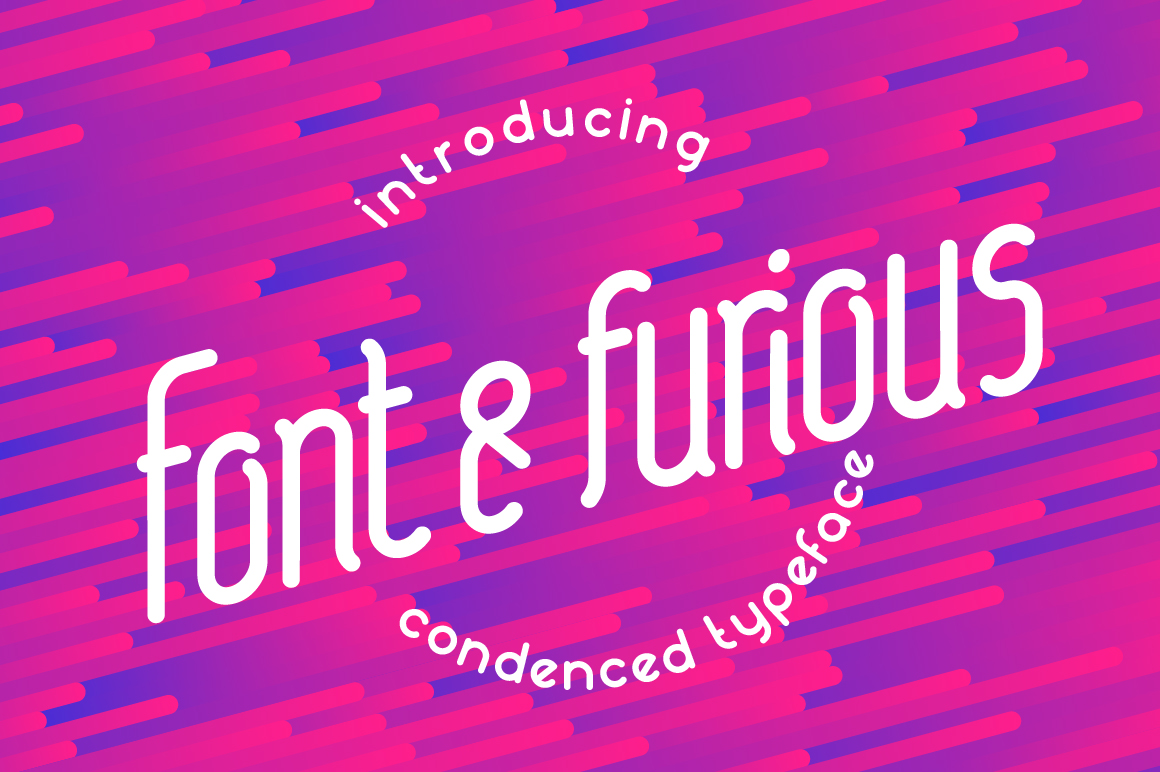
Font Furious belongs to the italic sans serif category, but its construction is notably minimal and deliberate. The letterforms are rounded, not in a playful or decorative sense, but in a way that softens the overall typographic texture. This makes it distinct from many italic fonts that rely on pronounced slant or cursive flourishes. Instead, Font Furious achieves italic character through subtle angle adjustments and gentle curves, resulting in a typeface that feels both modern and restrained.
The rounded shapes are a key feature. They reduce visual harshness, which can be especially useful in layouts where the font appears at larger sizes or in close proximity to other design elements. The minimalism means there is little ornamentation, so the typography does not compete with imagery or color. For designers who value clarity and calm in their work, these qualities can be appealing.
It is worth noting that Font Furious is described as a display font. This classification indicates it is optimized for headlines, titles, and other prominent text rather than extended body copy. While it can work at smaller sizes, its design details—particularly the rounded curves and italic angle—are most effective when given enough space to be seen and appreciated.
Where Font Furious Excels: Strong Use Cases
Based on its design features, several scenarios align well with what Font Furious offers. Understanding these can help you assess whether it matches your project requirements.
Magazine and Editorial Layouts
Magazine and editorial design often rely on typography that establishes a mood while remaining highly readable. Font Furious, with its clean lines and smooth forms, works well for headlines, pull quotes, and section titles. Its italic nature adds a sense of motion or direction, which can guide the reader's eye across a spread. The minimal style also pairs well with photography and white space, making it a strong option for modern editorial projects that avoid heavy ornamentation.
Brochures and Business Cards
For print collateral such as brochures and business cards, Font Furious offers a professional yet approachable feel. The rounded shapes contribute to a smooth visual flow, which can be particularly effective in conveying a brand that values clarity and ease of interaction. On business cards, where text is limited and size is often constrained, the font's clean anatomy helps maintain legibility without sacrificing character. It can serve as a distinctive brand voice without overwhelming the small canvas.
Digital Interfaces and Web Headings
While the font is described as working well in both print and digital, its display orientation makes it a good candidate for website headings, hero text, and digital banners. The italic angle adds energy to digital interfaces that might otherwise feel static. Because the font is minimal, it renders cleanly on screens, and the rounded forms reduce pixel-level harshness. This can be a subtle but meaningful advantage in digital contexts where user experience depends on clarity and visual comfort.
Evaluating Tradeoffs and Practical Considerations
No typeface is universally optimal. Choosing Font Furious involves weighing its benefits against certain tradeoffs.
Limited Suitability for Long-Form Body Text
The most significant limitation is that Font Furious is not designed for extended reading. Its italic slant and rounded shapes, while aesthetically pleasing, can cause reader fatigue at small sizes over long passages. For body copy in books, lengthy reports, or text-heavy web pages, a more neutral and upright sans serif or serif font is typically a better choice. Using Font Furious for body text may compromise readability and accessibility.
Potential Overlap with Other Display Italics
The minimal italic sans serif category includes several established options, such as Helvetica Neue Italic, Futura Light Italic, or Avenir Light Oblique. Font Furious is distinguished by its rounded forms, but the difference may be subtle depending on context. If a project already uses a similar typeface, Font Furious may not add enough distinction to justify a change. You will want to compare it directly with other candidates in your layout to see if the rounded character provides a meaningful advantage.
Brand Personality Considerations
Font Furious conveys a specific tone: clean, smooth, modern, and approachable. This works well for lifestyle brands, creative agencies, wellness products, and editorial content that values softness. However, for brands that need to communicate authority, tradition, or industrial ruggedness, the font's rounded minimalism may feel too gentle. In those cases, a more assertive or classical typeface could be a better fit.
When Alternatives May Be Worth Considering
While Font Furious has clear strengths, it is not the only option, and circumstances may lead you to evaluate alternatives.
If your project requires versatility across both headings and body text, a typeface family with multiple weights and optical sizes may be more practical. Font Furious appears to be a single-style offering, so you will need to pair it with another font for body copy. This adds complexity to the typographic system. If you prefer a single-family solution, consider a comprehensive sans serif like Proxima Nova or Open Sans, which offer italic and rounded variations within a larger family.
If your design calls for a more expressive italic—one with calligraphic flair, dramatic slant, or distinctive serifs—Font Furious may feel too subdued. Display italics like Lobster or Playfair Display Italic bring a different energy that could better suit a creative or literary brand. Conversely, if your need is for absolute neutrality, a standard upright sans serif may be more appropriate than any italic.
For digital-first projects where rendering at small sizes is critical, fonts specifically optimized for screen use, such as Inter or Source Sans, may outperform a display-oriented font. These typefaces are designed with legibility in low-resolution environments and typically offer extensive weight ranges.
Practical Decision-Making Insights
To determine whether Font Furious aligns with your goals, consider the following framework.
Assess your primary use case. If the font will appear mostly in headlines, titles, logos, or short-form print materials, Font Furious is a strong candidate. If you need a font for body text, newsletters, or long articles, look elsewhere and reserve Font Furious for accent roles.
Evaluate the visual environment. Font Furious pairs well with ample white space, clean layouts, and photography. If your design uses heavy textures, dense grids, or multiple typefaces, its minimal quality might get lost. It thrives in restrained, modern compositions.
Test in context. Before making a final decision, set a few words of Font Furious at your intended size in your layout. Compare it with other italic sans serifs side by side. Pay attention to how the rounded shapes interact with other elements. The difference may be subtle, but that subtlety can define the overall feel of your project.
Consider the printer or screen output. While the font is described as working in both media, always test print proofs if the final output is physical. Rounded shapes can sometimes lose detail at small sizes in print, depending on the printing method.
Plan for pairing. Since Font Furious is a display font, you will need a complementary typeface for body copy. A neutral sans serif or a clean serif can provide contrast. Test potential pairings to ensure the combination supports your design system without competing for attention.
Final Thoughts on Font Furious
Font Furious is a distinctive option within the italic sans serif category, offering clean lines, rounded forms, and a smooth visual texture. It is best suited for display applications where personality and clarity are equally important. Its minimal design makes it versatile within certain contexts, particularly magazine layouts, brochures, business cards, and editorial projects that lean modern.
However, its limitations in extended body text, its specific tonal range, and the availability of similar typefaces mean it is not a universal solution. By evaluating your project's specific needs—size, volume, medium, and brand personality—you can decide whether Font Furious enhances your work or whether an alternative might serve you better. As with any typeface, the final judgment should come from testing in real-world conditions rather than from features alone.