Deco: Where Hand-Drawn Warmth Meets Art Deco Sophistication
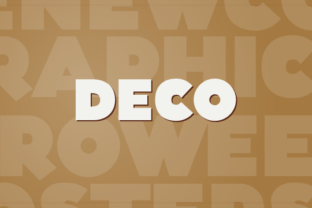
Finding a font that walks the line between meticulously designed and effortlessly handmade is rare. Most digital typefaces feel too perfect. They have a sterile precision that, while functional, lacks soul. Then you come across something like Deco. This isn't just another geometric sans-serif. It is an Art Deco inspired chunky font that captures the irregular charm of a hand-drawn letterform without sacrificing the elegance that made the Roaring Twenties a golden age of design. It has a unique blend of humor and grace, which immediately opens up a world of creative possibilities. Whether you are building a brand from scratch or looking for a headline font with personality, understanding how to deploy this tool effectively can transform your projects.
Giving Your Brand a Voice with Vintage Character
Think about the brands that stop you mid-scroll. The ones that feel like they have a story. For small business owners, especially those in hospitality or artisanal goods, the right typeface is the foundation of that story. If you are branding a craft cocktail bar, a vintage clothing boutique, or a bakery that specializes in French patisserie, you need a font that communicates quality and history without looking like a museum piece.
Deco works exceptionally well here because it feels established. It evokes the craftsmanship of the 1920s and 1930s. Imagine a logo for a speakeasy called "The Velvet Lounge." A standard sans-serif would look too corporate. A script might be too delicate. Setting the wordmark in Deco, however, gives it an immediate sense of place. The chunky weight of the letters creates a strong silhouette on a dark storefront or a moody website background. The subtle irregularities in the strokes make it look like it was painted by hand onto a frosted glass window. This builds trust. It tells the customer that this business values atmosphere and detail.
This is particularly effective for artisans and craft producers. If you are selling small-batch hot sauce, hand-poured candles, or organic skincare, your packaging needs to look as good as the product feels. Deco brings a tactile, premium quality to labels. It suggests that the product inside was made with care, not on an assembly line. It gives a small brand a massive leg up in visual storytelling.
Making Products Stand Out on the Shelf
The retail environment is visually noisy. Whether it is a physical shelf or a thumbnail on a marketplace, your product has a split second to grab attention. This is where the "chunky" aspect of Deco becomes a superpower. It is a highly readable display font from a distance. Its bold strokes create a solid block of text that demands to be looked at.
Consider the packaging for a premium coffee roaster. You might use a clean, minimalist bag, but the name of the blend—say "Ethiopian Yirgacheffe" or "Midnight Roast"—set in Deco immediately feels authoritative and classic. It mimics the look of vintage coffee tins and crate labels. This triggers a sense of nostalgia and perceived value. The same principle applies to craft beer labels. A Belgian Dubbel or a Bourbon Barrel Stout labeled with Deco instantly signals a traditional brewing method and a respect for the craft. It tells the consumer this isn't a mass-market fizzy yellow beer; this is an experience.
There is a practical observation here regarding print production. Because of its clean, heavy strokes, Deco holds up very well on uncoated or textured papers. If you are printing on kraft paper, cotton stock, or linen labels, the ink doesn't get lost in the fibers. The edges remain crisp. This is a massive advantage for product designers who want a tactile, rustic feel without losing readability.
Adding Tactile Depth to Digital Content
There is a misconception that overly decorative or vintage fonts perform poorly on screens. While this can be true for delicate scripts, Deco breaks that rule. Its sturdiness translates beautifully into digital spaces. For content creators, social media managers, and digital marketers, this font is a secret weapon for cutting through the noise.
Scrolling through Instagram, Pinterest, or TikTok, the visual landscape is dominated by clean, airy sans-serifs. They are safe. Deco is the opposite of safe. It introduces texture and a point of view. If you are a food blogger posting a recipe for a classic Old Fashioned cocktail, using Deco for the title card instantly sets the mood. It transports the viewer. It turns a simple recipe post into an editorial piece.
For web designers, Deco is excellent for hero section headlines. A chunky, elegant headline above a soft, blurred background image creates fantastic visual contrast. It grounds the page. Because it carries so much personality, you can often get away with minimal imagery. The font itself becomes the primary graphic element. Just be mindful of spacing. Because the letters are wide and heavy, giving them generous letter-spacing (tracking) can improve readability, especially on smaller mobile screens. Leaving plenty of white space around the text ensures it breathes and doesn't overwhelm the layout.
Designing Events with a Distinct Point of View
Event planning is all about setting a tone before the guest arrives. The invitation is the first touchpoint. Whether you are organizing a corporate gala, a 1920s-themed party, or an upscale wedding, Deco delivers immediate contextual cues.
For brides and grooms planning a "Great Gatsby" themed wedding, this font is practically required. The names of the couple set in Deco at the top of a heavy cardstock invitation feels timeless. It pairs incredibly well with gold foil stamping. The thickness of the letters catches the light and creates a luxurious shimmer. You can carry this theme across the entire event suite: place cards, menus, signage for the bar, and even the hashtag sign for the photo booth. It creates a cohesive visual language that feels intentional and high-end.
Even for non-vintage themed events, Deco can be used for specific elements. Imagine a modern corporate event where the keynote speaker's name is presented in Deco on a large stage screen. It commands authority and respect. It breaks away from the generic, corporate typography that usually fills conference halls. It injects a sense of class and history into a modern setting. For event florists and planners, using Deco on a mood board helps clients immediately grasp the aesthetic direction. It is a shorthand for "elegant, classic, and bold."
How to Make Deco Work Hard for You
Like any specialized tool, Deco shines brightest when you understand its strengths and respect its limits. It is a display font through and through. This means it is designed for impact, not for extended reading. Avoid using it for long paragraphs or dense body text. It excels in headlines, subheadings, pull quotes, logos, and short bursts of text (like a product name or a call to action).
One of its greatest strengths is its versatility in tone. It can be humorous or elegant depending on the context. If you use it with bright, playful colors and informal imagery, the "hand-drawn irregular charm" comes to the forefront, making it feel approachable and fun. If you pair it with deep jewel tones, gold accents, and formal imagery, the "Art Deco elegance" takes over, making it feel luxurious and sophisticated. You get two personalities in one font.
Before you commit, consider your pairings. Because Deco has such a strong personality, it needs a supporting player that won't clash. Here are a few effective strategies:
- Clean Sans-Serif: Pair it with a light or regular weight sans-serif like Montserrat, Open Sans, or Lato. This creates a beautiful "classic vs. modern" tension.
- Classic Serif: For an ultra-traditional look, pair it with a refined serif like Playfair Display or Garamond. This is a very editorial, high-fashion combination.
- Simple Script: For invitations, a very clean and legible script can work, but be careful not to overcrowd the design with too many competing ornate elements.
Conversely, avoid pairing Deco with other chunky, decorative, or grunge fonts. The result will be chaotic and hard to read. Give Deco the spotlight. Let it be the star of the show while your secondary font handles the heavy lifting of the body copy.
Finally, always test the legibility at the size you intend to use it. At very small sizes (under 12pt), the chunky strokes can sometimes merge together, especially on low-resolution screens or rough paper. For print, a size of 18pt or larger is usually the sweet spot for maximum impact. For digital headlines, make sure it scales well on mobile.
Deco is more than just a pretty face. It is a functional tool that brings a sense of history, craftsmanship, and personality to any project. Whether you are labeling a product, branding a business, or designing an experience, this font offers a warmth and elegance that is hard to find in the modern digital library.