Children One and Children-One: A Font That Captures the Charm of Hand-Drawn Letters
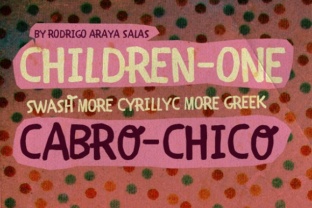
Typography often walks a fine line between precision and personality. While many fonts strive for geometric perfection, there is something deeply appealing about letterforms that feel human, imperfect, and full of character. Children One, created by type designer Rodrigo Typo, does exactly that. Inspired by the process of drawing freehand letters in a childish style, this typeface captures the raw, unfiltered energy of a child’s first attempts at writing. It’s not about flawless curves or mathematically aligned baselines. It’s about the wobble, the uneven pressure, and the innocent charm that only comes from a hand that hasn’t yet learned to conform.
Where the Idea for Children One Began
Rodrigo Typo didn’t set out to design another clean sans-serif or a trendy script. Instead, the Children-One font grew from observing how children naturally form letters. When a child picks up a crayon or a marker, they don’t worry about stroke consistency or kerning. They draw letters the way they feel them. Some strokes are heavy, others light. Some letters lean slightly to the right, while others tilt left. There is an honesty in that process that is incredibly hard to replicate with digital tools. The challenge Rodrigo Typo took on was preserving that spontaneous feel while creating a usable typeface for designers, educators, and creatives.
Unlike many handwritten fonts that try to simulate perfect cursive, Children One embraces the irregularities that make handwriting unique. Ascenders and descenders vary in length. Some letters are wider, others narrower. The result is a typeface that feels alive—like someone just scribbled it on a piece of paper moments ago.
Key Characteristics of the Children One Typeface
When you first look at Children One, the most noticeable quality is its unevenness. But that unevenness is intentional and carefully balanced. Here are the defining traits that set it apart from other handwriting-inspired fonts:
- Varied stroke thickness: Unlike digital fonts that maintain uniform line weight throughout each character, Children One features strokes that thicken and thin naturally, mimicking the pressure changes of a hand-drawn letter.
- Inconsistent slant: Some letters stand upright, while others lean. This irregularity is what gives the font its authentic, unpolished feel. It lacks the rigid italic angle found in most typefaces.
- Open and playful letterforms: Characters like "a," "e," and "g" are drawn with generous openings, making them easy to read at larger sizes while retaining a playful appearance.
- Minimal character repetition: The font avoids the robotic look of many handwritten fonts by subtly varying the shapes of repeated letters, especially in lowercase forms.
- Soft, rounded terminals: Instead of sharp cutoffs, the letter endings feel gentle, as if drawn with a felt-tip pen or a well-worn crayon.
These qualities make Children One especially effective in projects where you want to evoke warmth, creativity, or nostalgia. It doesn’t try to be sophisticated. It tries to be real.
Practical Applications of Children One in Modern Projects
Designers often struggle to find fonts that feel genuinely handmade without looking forced. Children-One fills that gap beautifully. Here are a few scenarios where this typeface shines:
Educational Materials and Classroom Resources
Teachers and curriculum designers frequently look for fonts that feel approachable to young learners. Children One works well for worksheets, flashcards, and classroom posters. Its friendly, irregular shapes help children recognize that letters don’t have to be perfect to be correct. When used in early literacy materials, it reduces the intimidation factor that often comes with more mechanical typefaces.
Children’s Book Illustrations and Covers
Publishing a picture book or an early reader? The cover needs to signal immediately that this is a story for kids. Children One pairs beautifully with hand-drawn illustrations, watercolor textures, and crayon-like graphics. Many children’s book designers use it for title pages, chapter headings, or whimsical display text because it blends seamlessly with organic art styles.
Branding for Playful or Creative Businesses
Not all brands need a sleek, corporate look. Daycare centers, toy stores, art studios, and children’s clinics benefit from typography that feels personal. Using Children One on signage, packaging, or website headers immediately communicates a brand that is approachable, fun, and child-friendly. It works especially well when paired with a neutral, clean sans-serif for body text, creating a contrast between playfulness and clarity.
DIY and Craft Projects
For anyone creating printables, party invitations, or scrapbook pages, Children-One offers a handmade aesthetic without needing to actually handwrite every letter. It saves time while maintaining a personal touch. Bloggers who write about parenting, crafting, or early childhood often use this font for headings and callout boxes to reinforce a cozy, relatable tone.
What to Consider Before Using Children One
As much as Children One excels in certain contexts, it isn’t a one-size-fits-all solution. Being aware of its limitations helps you use it more effectively.
Readability at small sizes: Because the font deliberately avoids uniformity, very small text can become hard to parse. The variations in stroke weight and slant that make it charming at 24 points can make it messy at 10 points. Reserve Children One for headings, titles, and short phrases rather than long body copy.
Character set considerations: Some versions of the Children-One font may have limited glyph support. Before committing to it for a multilingual project, check whether it includes accented characters, punctuation, and numerals that match your needs. Rodrigo Typo designed the core set with common Latin characters in mind, but verify the specific version you download.
Pairing with other fonts: To avoid visual chaos, pair Children One with a very simple companion font. A geometric sans-serif like Roboto or a clean slab serif works well. The key is to let Children One be the star while the other font provides structure. Avoid pairing it with another handwriting font, as that can look cluttered and compete for attention.
Licensing and usage rights: Like all fonts from independent designers, check the license before using Children One in commercial projects. Some versions are free for personal use but require a license for branding, products, or digital assets. Supporting the designer ensures that unique typefaces like this continue to be developed.
How Children One Fits Into the Broader Typography Landscape
The demand for authentic, human-centered design has grown significantly in recent years. As digital interfaces become more polished, there is a counter-movement toward imperfection. Designers are seeking out fonts that feel less manufactured and more organic. Children One belongs to this category alongside other hand-drawn and marker-style typefaces. However, what sets it apart is its specific inspiration from childhood handwriting rather than adult calligraphy or casual script.
Rodrigo Typo’s approach reflects a broader understanding that typography can evoke emotion beyond just readability. A font like Children-One doesn’t just convey words. It conveys mood. It reminds adults of their own early scribbles and makes children feel that their own writing is valued. This emotional resonance is part of why clients often request it for projects that need to feel tender, nostalgic, or whimsical.
From a technical perspective, the font also demonstrates how variable fonts and OpenType features can preserve hand-drawn irregularities while remaining functional. Designers can use Children One in digital environments, print, and even video titles because its vector outlines maintain the original hand-drawn quality at any scale.
Recommendations for Getting the Most Out of Children One
If you are considering adding Children One to your font library or using it for an upcoming project, here are a few practical tips drawn from experience:
- Use it on colored or textured backgrounds. Because the font already feels like it belongs on paper, placing it on a soft pastel background, kraft paper texture, or slightly off-white surface enhances its handmade quality.
- Combine with simple icons or doodles. Adding hand-drawn elements like stars, arrows, or simple animal shapes around the text reinforces the overall aesthetic. Keep the icons minimal so they don't compete with the letterforms.
- Adjust letter spacing for effect. In some contexts, loosening the tracking slightly gives the letters more room to breathe, making the font feel even more casual. Tight tracking can work for short, punchy titles but may overwhelm longer phrases.
- Use it in short bursts. A headline, a pull quote, or a single word in Children One stands out beautifully. Using it for an entire paragraph tends to tire the eye, so limit it to display purposes.
- Test it with your audience. If you are designing for young children, show them the font and see if they respond positively. The goal is to create a connection, and sometimes that means simply trusting gut reactions.
Final Observations on the Value of Hand-Drawn Typography
Children One is more than just a font. It is a reminder that not everything in design needs to be polished, symmetrical, or predictable. The best projects often include a moment of imperfection that feels uniquely human. Rodrigo Typo captured that moment in a digital typeface, making it accessible for designers who want to inject a bit of childhood wonder into their work.
Whether you are designing a classroom poster, a children’s book cover, or a playful brand identity, Children-One offers a rare combination of authenticity and usability. It respects the messy, joyful process of learning to write while giving professionals a tool that works reliably across media. That balance is not easy to achieve, and it’s exactly why this typeface deserves attention.
When you use Children One, you are not just choosing a font. You are choosing to let your design feel a little more alive, a little less perfect, and a lot more like something a child would actually want to read.