Carnot: Where Geometric Precision Meets Bold Elegance in Modern Typography
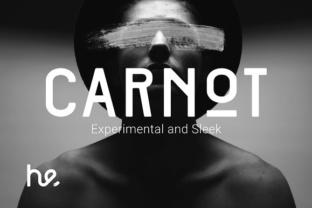
Typography has always been a quiet powerhouse in design. It shapes perception, guides attention, and communicates personality before a single word is read. Among the many typefaces vying for attention in today's crowded visual landscape, Carnot stands out as a thoughtful response to a growing need: the desire for fonts that are both structurally rigorous and visually warm. Designed by the Hederae Type Foundry, Carnot is a modern grotesk font that fuses strong geometric bones with a refined sense of elegance. It feels familiar yet fresh, disciplined yet expressive. For professionals, creators, and business owners alike, this typeface offers a compelling tool for projects where clarity and character must coexist.
What Makes Carnot a Distinctive Modern Grotesk
To understand Carnot, it helps to look at the grotesk tradition. Grotesk typefaces emerged in the nineteenth century as functional, no-frills designs for commercial printing. They were straightforward, often stark, and built for legibility at small sizes. Over time, grotesks evolved into the backbone of modern branding, with classics like Helvetica and Univers setting the standard for neutrality. But the contemporary design world has moved beyond pure neutrality. Today, brands and creators want type that carries a point of view without screaming for attention.
Carnot answers this shift. Its geometric construction is evident in the clean curves, consistent stroke weights, and precise terminal shapes. But unlike older grotesks that can feel cold or mechanical, Carnot introduces subtle nuances that give it human warmth. The letterforms are not rigidly uniform; there is a measured rhythm in the spacing, a slight softening in the corners, and a considered balance between straight lines and rounded gestures. This is what the foundry calls a mix of bold elegance. It is typography that commands respect without being aloof.
The font works equally well in display sizes, where its geometry becomes a confident statement, and in body text, where its clarity ensures comfortable reading. This duality is rare. Many geometric fonts excel in headlines but falter in paragraphs. Carnot bridges that gap, making it a versatile choice for everything from corporate identities to editorial layouts.
Why Typography Matters More Than Ever in a Visual Economy
We live in an era of information overload. Every scroll, swipe, and click brings a new wave of text and imagery. In such an environment, typography is not just decoration; it is a navigation tool. A well-chosen typeface can reduce cognitive load, build trust, and make content feel instantly more credible. This is especially true for professionals and entrepreneurs who rely on digital platforms to communicate their value. Whether it is a website, a pitch deck, a social media carousel, or a printed brochure, the font choices signal professionalism and attention to detail.
Carnot aligns with current trends toward authentic minimalism. Audiences are growing tired of overly ornate designs that prioritize flair over function. They want clarity, honesty, and a sense of purpose. Geometric grotesks like Carnot deliver this because they strip away unnecessary decoration. Every curve and corner serves a structural function. The result is typography that feels intentional and grounded.
At the same time, there is a hunger for personality. Pure minimalism can feel sterile. Carnot avoids this trap through its elegant proportions. The rounded terminals and carefully modulated stroke contrasts add a layer of sophistication that distinguishes it from more industrial geometric fonts. It does not try to be friendly in an obvious way, but it is approachable. It does not shout, but it is heard.
The Evolution of Grotesk Typefaces and Carnot Place in That Story
The history of grotesk typefaces is one of gradual refinement. Early versions were rough and utilitarian, designed for speed and economy. By the mid-twentieth century, Swiss design principles pushed grotesks toward greater uniformity and neutrality. Helvetica, released in 1957, became the apotheosis of this approach: a typeface so neutral it could be used for almost anything. But that very neutrality has become a liability in recent years. Brands increasingly seek differentiation, and a generic sans serif no longer cuts through the noise.
Enter the contemporary grotesk revival. Designers are revisiting the genre but injecting it with personality, warmth, and geometric precision. Carnot belongs to this new wave. It respects the functional roots of the grotesk tradition while embracing the expressive possibilities of geometry. The result is a typeface that feels both timeless and current. It nods to the past without being nostalgic.
Hederae Type Foundry has positioned Carnot as a font that works across media. In print, its strong geometry ensures crisp reproduction even at small sizes. On screens, its generous x-height and open counters enhance legibility, reducing eye strain during extended reading. This adaptability is crucial in a world where content must flow seamlessly from desktop to mobile to signage. Carnot handles these transitions with grace, maintaining its character whether rendered in pixels or ink.
Practical Implications for Creators, Marketers, and Business Owners
Choosing a typeface is never just an aesthetic decision. It affects how audiences perceive a brand, how long they stay on a page, and whether they trust the message. For marketers and business owners, Carnot offers a strategic advantage. Its geometric clarity supports quick comprehension, which is vital for headlines, calls to action, and brand taglines. A bold headline set in Carnot carries authority without aggression. It says, "We know what we are doing," without needing to prove it.
For creators and educators who produce long-form content, the legibility of Carnot in body text is a practical benefit. Readers today are impatient. If a font feels cramped, uneven, or tiring to the eyes, they will leave. Carnot even spacing and consistent stroke weight reduce friction, allowing the content itself to take center stage. This makes it a strong choice for blogs, online courses, newsletters, and documentation.
Freelancers and small business owners often wear many hats, designing their own materials without a dedicated creative team. For them, investing in a versatile typeface like Carnot simplifies the design process. It works across multiple applications, so there is no need to juggle half a dozen fonts for different use cases. A single family can handle the website headers, the PDF proposal, the Instagram quote card, and the business card. That consistency builds a cohesive brand identity over time.
How Carnot Fits Into Modern Workflows and Changing Habits
The way people work and consume content has shifted dramatically in recent years. Remote work, digital-first communication, and the rise of self-publishing have placed greater emphasis on clear, efficient visual communication. Professionals are creating more content themselves, and they need tools that are powerful yet easy to use. Carnot extensive character set, including multiple weights and italic variants, gives users flexibility without overwhelming complexity.
Another trend Carnot addresses is the move toward brand differentiation through typography. As more businesses adopt minimalist visual identities, the typeface becomes a key differentiator. Two brands might both use a clean, simple logo, but the choice of font subtly changes how they are perceived. Carnot geometric but elegant personality allows a brand to feel modern and refined simultaneously. It is serious but not stern, polished but not pretentious.
For educators and bloggers, Carnot readability across devices is a major advantage. Content is read on phones, tablets, laptops, and sometimes printed. A font that maintains its legibility and character across all these contexts saves time and reduces frustration. Readers do not consciously notice good typography, but they feel its effects. Carnot works in the background, making every reading experience smoother.
Practical Recommendations for Using Carnot Effectively
To get the most out of Carnot, consider the following approaches:
- Use the heavier weights for impact. The bold and extra bold variants of Carnot carry substantial visual weight without becoming clumsy. They work well for headings, pull quotes, and hero text where you want to command attention.
- Pair it with contrasting typefaces for editorial projects. Carnot geometric clarity pairs beautifully with a serif typeface for body text, creating a dynamic tension between structure and tradition. Alternatively, using Carnot throughout a project, with careful variation in weight and size, produces a clean, monochromatic look.
- Pay attention to spacing. While Carnot comes with well-tuned default kerning, fine-tuning tracking for specific applications, especially at large sizes, can enhance its elegant qualities. A little extra letter-spacing in display settings emphasizes the geometric forms.
- Consider the context. Carnot suits brands and projects that value precision, clarity, and a forward-looking attitude. It may not be the best choice for enterprises that want a rugged, handcrafted, or playful feel. But for industries like technology, consulting, finance, education, and creative services, it is a natural fit.
Why People Are Paying More Attention to Typeface Choices
Typography is no longer a niche concern reserved for graphic designers. As more people create their own content through blogs, social media, newsletters, and online courses, the awareness of how fonts shape perception has grown. A poorly chosen typeface can undermine credibility. A well-chosen one can elevate even simple content. Carnot offers a balanced option for those who want their work to look professional without subscribing to the latest trend or defaulting to the most common system fonts.
There is also a growing appreciation for the craft behind type design. Audiences are more visually literate than ever. They notice when a font feels off or when it has been used carelessly. They also recognize when a typeface has been selected with care. Carnot, with its thoughtful geometry and elegant proportions, signals that attention to detail has been paid. In a competitive landscape, that signal matters.
Bringing Bold Elegance Into Your Next Project
Carnot is more than a font. It is a design tool that brings together two qualities that often feel at odds: strength and refinement. Its geometric foundation provides the stability and clarity needed for modern communication, while its elegant touches ensure that the result feels human and welcoming. For anyone who needs to communicate with confidence, clarity, and a touch of sophistication, Carnot deserves a close look.
Whether you are designing a brand identity, laying out a publication, or simply looking for a reliable typeface for daily use, Carnot offers a solution that is both practical and inspiring. It is a reminder that good typography is not about decoration. It is about making ideas easier to see, understand, and remember. And in a world where attention is the scarcest resource, that is a powerful advantage.