Deco Hatched: The Art Deco Font That Balances Irregular Charm and Elegant Grace
Not every font has the courage to be playful and refined at the same time. Most typefaces pick a lane: they are either rigorously geometric or warmly hand-drawn. When a design needs both structure and spontaneity, the options shrink fast. This is why Deco Hatched stands out in the crowded world of display fonts. It manages to feel like a freshly inked sketch while carrying the unmistakable poise of classic Art Deco lettering. For designers looking to add personality without sacrificing sophistication, this typeface deserves a serious look.
The Duality of Deco Hatched
The name itself hints at the font’s core tension. “Deco” points directly to the Art Deco tradition — that bold, symmetrical, and luxurious style that dominated the 1920s and 1930s. Think of the Chrysler Building, vintage travel posters, and Gatsby-esque glamour. Traditional Art Deco typefaces are precise, often built from strict geometric rules. They project authority and elegance, but sometimes feel cold or impersonal.
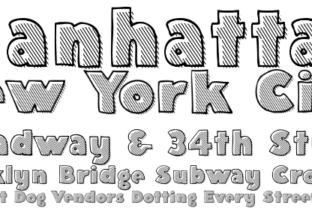
Enter “Hatched.” That word suggests something sketched, textured, and human. Indeed, Deco Hatched carries the irregular charm of a hand-drawn font. You see slight variations in stroke thickness, subtle wobbles in curves, and a general warmth that machine-cut letters lack. Yet these rough edges never overwhelm the underlying geometry. The letterforms still respect the classic proportions of Art Deco — tall uppercase forms, dramatic contrasts between thick and thin strokes, and decorative finials that recall the roaring twenties.
This combination is trickier to pull off than it sounds. Most attempts to merge hand-drawn texture with geometric discipline end up looking messy or half-baked. Deco Hatched succeeds because the irregularities are consistent. They create a unified surface texture across the entire set of characters. The result is a font that feels both intentional and spontaneous — like a skilled calligrapher decided to tighten up their style for a formal commission.
Where Humor and Grace Meet
One of the most appealing qualities of any typeface is its emotional range. Some fonts are strictly serious; others are cartoonishly fun. Deco Hatched occupies a rare middle ground. It has enough humor to lighten a message without turning it into a joke, and enough grace to appear on an invitation without feeling stiff.
This balance comes from the “hatching” itself — the visible pencil-like strokes that give the letters their texture. In lowercase letters, those strokes often lead to playful ascenders and descenders that break the strict baseline. In capital letters, the same texture adds a sense of movement and warmth that typical Art Deco fonts lack. The font can make a headline feel approachable while still looking upscale. That dual personality is exactly what many brands and projects need right now.
Think about the current visual landscape. Minimalism has dominated for years, but audiences are beginning to crave a bit more personality. Flat design is giving way to textures, gradients, and illustrations that feel handmade. Deco Hatched fits this shift perfectly. It brings the hand-crafted aesthetic that consumers associate with authenticity, but it does so without abandoning the clean structure that makes layouts readable and professional.
Modern Workflows and Applications
Where does a font like this actually get used? The answer is surprisingly broad. Because Deco Hatched sits at the intersection of two different styles, it adapts to projects that most display fonts cannot handle alone.
Branding and Logo Design
A logo needs to be memorable, distinctive, and legible at small sizes. Many hand-drawn fonts fail the third test: their quirks become blurry noise when scaled down. Geometric fonts, on the other hand, often feel too generic to stand out. Deco Hatched walks the line. Its irregular strokes remain visible at moderate sizes (around 24 px and above), while its classic proportions keep it readable. For a coffee shop that wants vintage charm, a law firm that wants approachable authority, or a creative agency that wants to signal both craft and precision, this font is a strong candidate.
Digital Design and Web Headlines
On screens, texture can be tricky. Overly textured fonts often look crusty at low resolutions. Deco Hatched is forgiving because its “hatching” is not overly detailed — it mimics a medium-tipped marker rather than a fine nib. This translates well across devices. The font works beautifully for hero section headlines, blog post titles, and call-to-action buttons where you want to stop the scroll with character. Pair it with a clean sans-serif (like one of the many geometric options available) for body copy, and you create a contrast that feels curated, not chaotic.
Print and Editorial
If you ever design magazines, posters, or book covers, you know that a single display font can define the entire tone of a piece. Deco Hatched fits editorial work that needs a vintage yet fresh feel. Use it for pull quotes, section headers, or cover lines. The hand-drawn texture adds a tactile quality that invites readers to linger. For wedding invitations, it strikes the perfect note between formal and friendly. For event posters, it can inject humor without undermining the event’s importance. The flexibility is real, not theoretical.
Packaging and Product Design
Shelves are crowded. Products need to communicate personality at a glance. A font like Deco Hatched can signal that a product is artisanal, small-batch, or thoughtfully designed without the need for extra illustrations. A jar of honey labeled with this font feels hand-painted. A box of chocolates with Deco Hatched lettering suggests indulgence with a wink. Because the font is not overly ornate, it also prints cleanly on various materials — paper, glass, metal, or even fabric labels.
Practical Considerations Before Choosing Deco Hatched
No typeface is perfect for every job, and being aware of its limitations is the first step toward using it well. Here are the factors you should consider before committing to Deco Hatched for your next project.
Readability at Small Sizes
Like most display fonts, Deco Hatched excels at medium to large point sizes. Once you drop below 16 px, the hand-drawn details begin to blur together, especially on low-resolution screens. For body text, you should pair it with a more readable companion font. A clean sans-serif like Montserrat or a classic serif like Playfair Display works well. Reserve Deco Hatched for headlines, short phrases, and elements where you want the texture to shine.
Letter Spacing and Kerning
Because the font has irregular edges, default kerning may not always look perfect. You will likely need to adjust tracking in your design software for specific applications. Tighter spacing works for large headlines where the letters feel unified; looser spacing can give a more airy, elegant feel for invitations or logos. Always preview your actual text before finalizing.
Pairing with Other Styles
The strength of Deco Hatched is its unique texture. That same strength means it can clash with other highly detailed fonts. Avoid pairing it with another hand-drawn or heavily textured typeface. Stick to one star per layout. Let Deco Hatched be the focal point, and choose a simple counterpart for the rest of the text. This is standard advice for display fonts, but it bears repeating because the font’s charm can easily become overwhelming if repeated too much.
Context and Audience
Not every brand or message wants a hint of humor. A funeral home, a high-end financial firm, or a government agency might find the playfulness of Deco Hatched inappropriate. Evaluate whether the font’s hand-drawn warmth aligns with the emotional tone you need to convey. For relaxed luxury, creative industries, hospitality, and lifestyle products, it is an excellent match. For strict formality, a traditional serif or a clean sans-serif may be a safer choice.
Examples and Recommendations
Let’s get concrete. Imagine you are designing a menu for a cocktail bar with a 1920s theme. Using Deco Hatched for the drink names immediately sets the mood. Pair it with a thin, all-caps sans-serif for descriptions and prices. The contrast between the textured headlines and the clean body text creates a layered reading experience that feels curated, not messy.
Or consider a small packaging line for handmade soaps. The brand values natural ingredients and artisanal methods. Deco Hatched on the front label — even just the brand name — communicates that the product is crafted by human hands, not mass-produced in a factory. The elegant undertones suggest quality, while the irregular strokes say “this is made with care.”
For a social media campaign about a limited-edition product, use Deco Hatched in a video thumbnail or static banner. The font grabs attention because it looks unlike the standard sans-serifs and scripts that dominate feeds. It stands out without screaming. That is a rare quality in the age of click fatigue.
If you are a designer building a personal portfolio site, consider using Deco Hatched for your own name in the hero section. It tells visitors that you value both precision and creativity. It sets a tone before anyone reads a single word about your work.
Final Observations on an Unusual Typeface
The best fonts do not fade into the background — they shape how the reader feels. Deco Hatched manages to shape that feeling in two directions at once. It grounds a design in the reliable structure of Art Deco, then lifts it with the freedom of hand-drawn linework. For projects that need personality without losing professionalism, this font deserves a place in your toolbox. Whether you are working on a brand identity, a digital campaign, or a physical product, the balance of irregular charm and elegant grace is exactly what many modern audiences are looking for. Give it the right context, and Deco Hatched will repay you with a memorable, human, and sophisticated result.