Bringing Bold Storytelling to Life with Braveheart
Whether you’re a graphic designer, a branding specialist, or a creative entrepreneur, you know that the right typeface can make or break a visual identity. Words carry meaning, but the way they are presented shapes how that meaning is received. When you need a font that commands attention, evokes history, and communicates strength, few options rival the impact of a well-crafted display font. Braveheart is precisely that kind of typeface – a beautiful display font designed to anchor logos, title sequences, magazine covers, and game titles with undeniable presence. This article explores what Braveheart offers, how it solves common design challenges, and practical ways you can put it to work in your next project.
Understanding Braveheart: More Than Just a Font
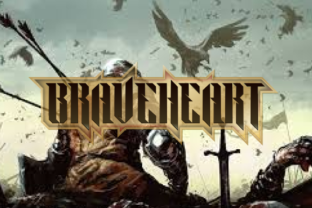
Braveheart is a display font inspired by classic heroic themes, medieval aesthetics, and cinematic grandeur. Its letterforms carry a refined yet rugged character, balancing ornate details with legibility. Unlike standard text fonts meant for long paragraphs, display fonts like Braveheart are built for short, high-impact uses—headlines, titles, brandmarks, and key visual elements. The font’s design often includes sharp serifs, dramatic contrasts, and a sense of weight that suggests stability and tradition. For anyone working on projects that require a tone of bravery, legacy, or epic scale, Braveheart delivers that emotional shorthand instantly.
One of the first challenges designers face is choosing a typeface that can hold its own in a crowded visual landscape. Many fonts feel generic or fail to carry a distinct personality. Braveheart solves this by offering a distinctive aesthetic that feels both historical and contemporary. It doesn’t just decorate words; it gives them authority. This makes it an excellent choice for projects where you need the text to feel like part of the story, not just a label.
Finding a Font That Conveys Strength and Authority
When creating a logo for a brand rooted in heritage, craftsmanship, or adventure, you need a font that says “trust” and “power” without shouting. Many bold fonts feel aggressive or blocky, losing the nuance that premium brands require. Braveheart strikes a balance. Its serifs are deliberate but not overwhelming, and the overall silhouette of each letter carries a sense of upright confidence. For a whiskey label, a law firm’s letterhead, or a heritage product line, Braveheart can communicate timeless strength while remaining readable and elegant.
Making Titles Memorable in Media and Entertainment
Movie titles, game titles, and magazine headlines face fierce competition for viewer attention. A weak font can make even a brilliant title forgettable. Braveheart’s distinct character ensures that the words themselves become part of the visual hook. Imagine a fantasy novel’s cover or the opening credits of a historical drama – the font sets the mood before a single image appears. Using Braveheart for such purposes reduces the need for excessive ornamentation because the typeface already carries enough visual weight. It helps you achieve a professional finish without overcomplicating the layout.
Creating Cohesive Branding Across Multiple Touchpoints
Many brands struggle to maintain a consistent visual identity across print, digital, and video. A display font as versatile as Braveheart can anchor your primary logo while its complementary weights (if available in the full family) can support subheadings or callouts. When you build a brand guide around Braveheart, you ensure that every piece of communication – from a business card to a social media banner – shares the same bold spirit. This consistency builds recognition and trust with your audience.
Logos and Brand Identities
Using Braveheart for a logo is one of the most natural applications. The font’s dramatic uppercase forms work well for monograms, wordmarks, and combination marks. For a boutique hotel that wants to evoke castle-like grandeur, Braveheart on the signage and website header instantly transports guests to a world of refined adventure. For a sports team or esports organization, the font brings a sense of battle-ready determination. When paired with a simple symbol, the logo becomes both modern and rooted in storytelling.
- Example: A craft brewery named “Ironwood” could use Braveheart for its main logo, with the “I” and “W” slightly enlarged for a unique lockup. The result: a label that looks like it belongs on a barrel in an ancient cellar.
- Outcome: Increased brand recall and a premium perception that justifies higher product pricing.
Movie, Series, and Game Titles
Entertainment titles demand fonts that can hint at genre and tone instantly. Braveheart excels here. Its medieval flair makes it a top pick for fantasy films, historical epics, and strategy games. But it also works for modern thrillers or adventure documentaries when you want to suggest resilience. In game UI, you might use Braveheart for the main title screen and then a lighter variant for button text (if you adjust weight or use a companion typeface).
- Example: A mobile strategy game called “Kingdom’s Edge” can use Braveheart for the app icon and splash screen, immediately telling players the game is about conquest and cunning.
- Outcome: Higher click-through rates in app stores and a more immersive first impression that drives engagement.
Magazine Covers and Editorial Design
Magazine covers are often the most valuable real estate in print or digital media. A cover line set in Braveheart demands attention. Because the font carries a slightly formal yet dramatic tone, it works well for niche publications focused on history, architecture, lifestyle, or adventure travel. Even a fashion magazine might use Braveheart for a special issue on “warrior elegance.” The outcome: covers that stop scrolling thumbs on social media and stand out on newsstands.
- Example: A feature titled “The New Age of Exploration” in an outdoor magazine can have the headline set in Braveheart, contrasting with a clean sans-serif for body text. The visual hierarchy becomes clear without extra graphics.
- Outcome: Improved readability and a thematic cohesion that reinforces the editorial message.
How Different Users Can Approach Braveheart
Not every project needs the same level of historical flair. Understanding how to adapt Braveheart to your specific context is key to maximizing its usefulness.
The Solo Entrepreneur or Small Business Owner
If you’re building a brand from scratch, your budget and time are limited. You need a font that does heavy lifting without requiring extensive customization. Start by using Braveheart for your primary logo and maybe one additional use, like your website’s hero heading. Pair it with a clean sans-serif (such as Open Sans or Lato) for body copy to keep the design balanced. This approach gives you a professional identity quickly, and the font’s distinctive character makes your brand feel established even if you’re just starting out.
- Practical tip: Download the trial version or purchase a license that covers both web and print. Use font-weight variations (if available) to give your headings hierarchy without switching typefaces.
The Professional Graphic Designer
As a designer, you likely have a range of projects with different tones. Braveheart becomes a tool in your arsenal for clients who need a “premium historical” or “bold traditional” look. You can push the font further by modifying letter spacing, adding custom ligatures, or even distressing the type (with proper licensing) for a weathered effect in a game or movie poster. For designers working on packaging, applying Braveheart in metallic foil or embossing can create a tactile luxury feel.
- Practical tip: Experiment with tracking (letter-spacing) to control readability at different sizes. Tight tracking works well for logos; wider tracking can make movie titles feel more epic.
The Game Developer or Content Creator
Indie game developers and streamers often search for fonts that convey genre fast. Braveheart can be used in key art, streaming overlays, and promotional materials. Because it’s a display font, you’ll want to avoid long text blocks. Use it only for the game title, major section headers, and maybe the “PLAY” button. For lore-heavy menus, consider a legible body font. The emotional payoff: players immediately feel the world you’re building, even before they read a single line of dialogue.
- Practical tip: Convert the font to outlines for use in video game assets to avoid compatibility issues across different platforms. Always check the license for embedding.
Useful Considerations Before You Buy
Before making Braveheart a permanent part of your design toolkit, consider a few practical factors. First, verify that the license covers your intended use—commercial, web, app, or broadcast. Many high-quality display fonts come with standard desktop licenses, but you may need an extended license for merchandise or mobile apps. Second, test the font at various sizes. Some display fonts lose charm when scaled down to mobile screen sizes; Braveheart’s robust design generally holds up well, but always preview on actual devices. Third, think about language support. If your project uses accented characters or non-Latin scripts, check whether Braveheart includes them. Finally, pair it wisely. A font as strong as Braveheart works best when paired with a neutral, modern typeface that doesn’t compete for attention.
If you’re on a tight deadline, you can also find free alternatives that mimic the medieval style, but they often lack the polish, kerning, and character sets that a professionally crafted font like Braveheart provides. Investing in a quality typeface saves time in the long run because you reduce the need for manual adjustments and inconsistent results.
Final Thoughts: Make Your Project Brave
In a world where visual noise is constant, standing out requires deliberate choices. A font like Braveheart is more than a stylistic preference; it’s a strategic asset. Whether you’re launching a craft brand, titling an indie game, or designing a magazine issue that demands gravitas, Braveheart gives your words the weight they deserve. It solves the challenge of translating emotion into form, helping your audience feel the story behind your text. By understanding your specific needs—logo clarity, title impact, brand consistency—you can deploy this font in ways that produce real, measurable outcomes. The right typeface doesn’t just make things look good; it makes them work better. Braveheart is ready to do that for you.