Janmeid: A Handmade Typeface with Three Distinct Dingbat Sets for Creative Storytelling
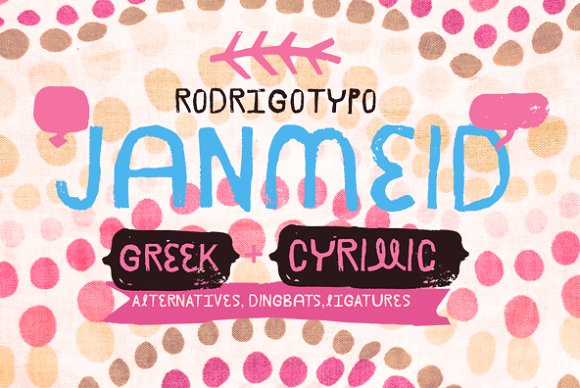
When typography steps beyond the boundaries of standard letterforms, it becomes a tool for visual narrative. Janmeid exemplifies this shift by offering a handmade typeface that is not merely a set of characters but a complete storytelling ecosystem. What sets Janmeid apart in the crowded landscape of display fonts is its integration of three unique dingbat sets—Xtreme, Tales, and Line—each designed to serve a specific creative purpose. Rather than being an afterthought, these decorative elements are woven into the font’s identity, allowing designers, educators, hobbyists, and business owners to add layers of meaning, mood, and movement to their projects without relying on external graphics.
The handcrafted nature of Janmeid gives it an organic warmth that many digital fonts lack. Every curve and stroke carries the subtle imperfections of human drawing, making it ideal for projects where authenticity matters. Whether you are building a brand for a local café, illustrating a children’s book, designing a poster for an extreme sports event, or adding elegant flourishes to wedding invitations, Janmeid adapts through its three dingbat companions. Understanding how each set functions—and how they can be combined—unlocks a versatile toolkit for visual communication.
This article explores the practical and creative dimensions of Janmeid, focusing on its three dingbat sets. We will examine their characteristics, ideal use cases, and the types of creators who benefit most from each. We will also discuss workflow considerations, such as layering dingbats with text, scaling for different media, and maintaining readability while maximizing decorative impact. By the end, you will have a clear picture of how Janmeid can serve as a cornerstone for projects ranging from gritty horror-themed campaigns to whimsical classroom materials.
The Three Pillars of Janmeid: Xtreme, Tales, and Line
Janmeid’s three dingbat sets are not merely collections of random symbols. Each set has been deliberately crafted to support a distinct genre or visual context. Let’s break down what each set offers and why it matters for different audiences.
Xtreme: Adrenaline, Edge, and Atmosphere
The Xtreme dingbat set is built for projects that demand high energy, tension, or a sense of danger. It includes motifs such as jagged shapes, skulls, flames, lightning bolts, barbed wire, and other imagery associated with extreme sports, horror stories, and gritty urban aesthetics. The line quality in Xtreme is intentionally rough and aggressive, matching the raw energy of the typeface itself.
For a designer working on a poster for a mountain biking competition or a skate park grand opening, Xtreme provides ready-made graphic elements that reinforce the brand’s adrenaline-fueled identity. Instead of sourcing stock vectors that feel generic, the dingbats remain stylistically consistent with Janmeid’s lettering because they share the same handmade DNA. This consistency is crucial when building a cohesive visual system.
Horror storytelling is another natural home for Xtreme. Independent authors creating cover art for supernatural thrillers or zombie apocalypse novels can use these dingbats as chapter dividers, margin decorations, or even as standalone illustrations on title pages. The raw, unpolished look of Xtreme evokes a handmade zine aesthetic that feels personal and unsettling—perfect for low-budget horror productions that want to avoid the polished sheen of mainstream publishing.
Businesses operating in the action sports industry—from apparel brands to event organizers—can also leverage Xtreme for social media graphics, merchandise designs, and promotional materials. The dingbats act as visual shorthand for excitement and risk, communicating instantly with audiences who identify with that lifestyle. However, it is worth noting that Xtreme’s aggressive style may overwhelm projects that require subtlety. Context is key; using a single flame motif as an accent can be powerful, but covering a page in jagged shapes might distract from the message.
Tales: Narrative Magic for Young Audiences
The Tales dingbat set shifts the mood entirely. Here, Janmeid offers whimsical, gentle, and storybook-inspired motifs: stars, moons, castles, trees, animals, crowns, and magical symbols. The line weight is softer, and the shapes evoke the charm of hand-drawn illustrations found in classic children’s literature. Tales is designed for storytelling in its purest form—especially for young readers or anyone seeking a nostalgic, comforting visual atmosphere.
Educators and librarians will find Tales particularly useful for creating classroom materials, reading logs, bulletin boards, and activity sheets. A teacher preparing a unit on fairy tales can use Janmeid’s Tales dingbats to frame vocabulary cards, decorate comprehension worksheets, or design a classroom newsletter. The handmade quality makes these materials feel approachable rather than institutional, which can help engage reluctant readers.
Children’s book authors and illustrators—whether self-publishing or working with small presses—can integrate Tales into their layouts without needing separate illustration software. A dingbat castle placed at the start of a chapter, a cluster of stars framing a key quote, or a small crown above a character’s name adds production value while maintaining a unified aesthetic. For digital editions, these elements can be scaled and colored to match the book’s palette, offering flexibility that pre-rendered clip art often lacks.
Hobbyists creating personalized gifts, such as custom storybooks for their own children, will appreciate how quickly Tales transforms plain text into something magical. A simple “Once upon a time” heading becomes visually enchanting when paired with a crescent moon and a tiny dragon. The set encourages experimentation: layering multiple dingbats around a title page can create a border effect that mimics engraved illustration.
It is important to consider readability when using Tales alongside body text. Because the dingbats are detailed and hand-drawn, they work best at larger sizes or as accents rather than as inline decorations within dense paragraphs. Keeping them in margins, headers, or separated by white space preserves the clarity of the written content while adding visual delight.
Line: Elegant Swashes and Decorative Flourishes
The Line dingbat set is Janmeid’s answer to sophistication. It contains decorative swashes, curls, dividers, ornaments, and geometric flourishes that can frame text, separate sections, or add a touch of elegance to any layout. Unlike Xtreme’s aggression or Tales’ whimsy, Line is neutral in narrative tone but rich in decorative potential. It functions much like a set of typographic ornaments from the golden age of print, adapted for modern digital workflows.
For business owners creating branded stationery—letterheads, invoices, business cards, or thank-you notes—Line offers a way to inject personality without sacrificing professionalism. A subtle swash under a company name or a delicate divider between contact details can elevate a plain document into something memorable. Wedding planners, event coordinators, and boutique service providers will find Line especially valuable for creating invitations, menus, place cards, and signage that feel handcrafted and exclusive.
Researchers and academics who prepare conference posters, presentation slides, or publication layouts might use Line to add visual structure without resorting to clip art. A thin ornamental line between sections of a poster can guide the eye naturally, while a decorative initial cap at the start of an abstract lends a touch of artistry to data-heavy content. The key is restraint: Line works best when it complements the text rather than competing with it.
Creators working in digital media—bloggers, newsletter writers, and social media content producers—can use Line to create consistent visual breaks in long-form content. A horizontal swash between paragraphs, a decorative bullet for list items, or a framed quote box helps readers navigate the page. Because Janmeid’s handmade quality carries through Line, these elements feel organic rather than templated, contributing to a cohesive brand voice.
One of Line’s strengths is its versatility across scales. At small sizes, the swashes read as elegant texture; at large sizes, they become dramatic focal points. Designers should experiment with rotating, overlapping, and recoloring Line dingbats to create custom patterns or borders. A repeated swirl motif can become a subtle background texture for a website header, while a single large ornament can serve as a watermark on printed materials.
Who Benefits Most from Janmeid’s Dingbat Ecosystem?
While Janmeid is a display typeface that any creator can use, its dingbat sets make it especially valuable for specific user groups. Understanding your own needs can help you decide whether Janmeid is the right tool for your next project.
Designers and Art Directors
For graphic designers, Janmeid reduces the friction of searching for complementary decorative assets. Instead of juggling multiple font families and vector collections, you have a single typeface that includes both letterforms and coordinated dingbats. This streamlines the design process, especially for tight deadlines. Art directors working on branding campaigns for lifestyle, entertainment, or hospitality clients can mix and match the three sets depending on the sub-brand being developed. A hotel chain might use Line for its main identity, Tales for family-friendly collateral, and Xtreme for an on-site adventure park. The consistency of the handmade style across all three sets ensures a unified feel even when the tone shifts.
Educators and Content Creators for Children
Teachers, homeschooling parents, and creators of educational media will find Tales a ready-made resource for making learning materials visually inviting. The dingbats can be used as rewards on worksheets, as visual cues for non-readers, or as decorative elements in classroom newsletters. Because Janmeid is a font, not a set of images, it can be typed directly into documents, saving time compared to copying and resizing clip art. The handmade style also aligns with current trends in education that favor authentic, less commercial aesthetics.
Small Business Owners and Entrepreneurs
For entrepreneurs who handle their own marketing, Janmeid offers a way to achieve a professional, custom look without hiring a designer. A bakery owner could use Tales for a whimsical product label, Line for elegant packaging, and Xtreme for a limited-edition spicy product line. Because the font is installed on a computer, it can be used across different platforms—from Canva to Adobe InDesign—making it accessible even for those with limited design experience. The key consideration is that Janmeid is a display font; it works best for headings and short text blocks rather than long passages. Pair it with a simple sans-serif for body copy to maintain readability.
Hobbyists and Independent Creators
Writers, zine makers, scrapbookers, and DIY enthusiasts will appreciate Janmeid’s ability to add a personal touch to projects. A poet self-publishing a chapbook might use Line to create elegant page dividers, or a horror fan creating a Halloween party invitation can draw on Xtreme for spooky accents. The dingbats enable non-designers to achieve a polished, themed look with minimal effort. The learning curve is low: install the font, select the dingbat character from the glyph palette, and adjust size and color like any other text element.
Practical Considerations When Working with Janmeid
To make the most of Janmeid, it helps to understand a few workflow details. First, because the dingbats are part of the font file, they are vector-based and scale infinitely without loss of quality. This makes them suitable for both screen use and large-format printing. However, since Janmeid is a handmade typeface, the dingbats have organic, irregular edges. This is desirable for most projects, but designers working in ultra-minimalist or hyper-clean contexts may find the style too rustic.
Another consideration is color. Janmeid dingbats inherit the font color applied to the text, which means you can easily change their hue to match your palette. For more advanced effects, you can convert the dingbats to outlines and apply gradients, patterns, or transparency. Combining dingbats from different sets in a single layout can create rich visual layers—for instance, framing a Tales castle with Xtreme lightning bolts for a dark fantasy vibe, or surrounding a Line ornament with tiny Tales stars for a magical formal invitation.
Accessibility also matters. While dingbats enhance visual interest, they should not carry essential information unless accompanied by text alternatives. Screen readers will not interpret a skull dingbat as “danger” unless you provide alt text. For web use, consider adding ARIA labels to decorative elements that convey meaning. For print, ensure that the dingbats are large enough to be appreciated by readers with visual impairments.
Finally, licensing terms always deserve attention. Janmeid is a commercial font, and users should verify whether the license covers the intended use—especially for for-profit projects, merchandise, or digital embedding. Many independent foundries offer standard desktop licenses that allow for most print and screen applications, but it is wise to read the fine print before launching a product line.
Getting Started with Janmeid: A Creative Workflow Suggestion
If you are new to Janmeid, start by exploring each dingbat set individually. Open a design document, type a few sample headings using the font, and then insert a few dingbats from Xtreme, Tales, and Line in turn. Observe how each set changes the mood. Then try combining them: place a Line divider under a headline, add an Xtreme accent beside a pull quote, or sprinkle Tales stars around a call-to-action button. Notice how the handmade consistency keeps the layout cohesive even when mixing themes.
Next, think about your audience. Are you designing for thrill-seekers, young children, or an upscale clientele? Let the answer guide your dingbat selection. For a mixed audience, consider using one set as the primary visual language and another as a subtle accent. For example, a community center flyer promoting both a kids’ storytelling hour and a teen skateboarding workshop could use Tales for the first section and Xtreme for the second, tied together by Line dividers. Janmeid becomes a unifying thread across diverse content.
Over time, as you build a library of projects using Janmeid, you will develop a feel for how much decoration is enough. The most effective uses of dingbats are often the most restrained—a single well-placed ornament that draws the eye without overwhelming the message. Janmeid’s three sets give you the range to make that choice across almost any creative context, from the gentlest fairy tale to the most extreme visual statement.