Lexlox: A Display Font That Cuts Through the Noise
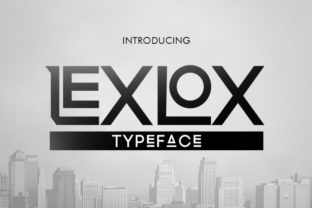
The moment a viewer lands on a brand’s homepage or catches a poster on a busy street, the typeface does most of the talking. First impressions in design are measured in fractions of a second, and the right font can signal confidence, creativity, or clarity before a single word is fully read. This is where a well-crafted display font becomes more than a stylistic choice—it becomes a strategic asset. Lexlox enters this space with a distinct visual signature: every single glyph carries a deliberate cut edge, a design decision that immediately separates it from the sea of rounded, softened, or purely geometric alternatives.
In a crowded marketplace where brands fight for that split second of attention, Lexlox offers a raw, unfinished quality that feels both intentional and powerful. It does not whisper. It does not blend in. Instead, it presents a sharp, almost chiseled aesthetic that suggests a brand built on precision, boldness, and a willingness to break from convention. For designers and art directors searching for a typeface that can anchor an entire identity system, this font demands a closer look.
The Defining Characteristic: A Cut Edge on Every Glyph
What sets Lexlox apart from the hundreds of display fonts released each year is not merely its geometric structure or its weight distribution. It is the consistent, almost obsessive application of a cut edge on every character. From the uppercase A to the lowercase z, from the numerals to punctuation, each form has been modified with a flat, angled slice. This is not a distressed texture applied randomly across the surface. It is a precise, engineered alteration to the silhouette of the font itself.
The effect is twofold. First, it introduces a tactile, almost physical quality to the type. Readers perceive depth and friction, as though the letterforms were carved from a solid material rather than drawn in vector software. Second, it creates a rhythm of negative space that flows across a headline or logo. The cut edges catch the eye, directing attention from one letter to the next in a way that smooth curves cannot replicate. This rhythmic quality makes Lexlox particularly effective in shorter, high-impact settings—think hero headlines, product names, or single-word logos.
When a designer works with a font that has such a pronounced feature, the temptation is to overuse it. But the true power of Lexlox lies in restraint. A single word set in this typeface can carry an entire brand message. Adding too many words or layering additional effects can muddy the very clarity the cut edges provide. The font works best when it is allowed to breathe, placed against ample negative space, and supported by a clean layout.
Building Identities That Demand Recognition
Brand identity work is, at its core, about differentiation. A new coffee shop, a tech startup, a fashion label, or a music festival all need a visual language that communicates their personality before a customer ever tastes a latte or clicks a button. Lexlox lends itself to personalities that are unapologetic, modern, and slightly edgy. It carries an industrial undertone without feeling cold. It is contemporary without chasing fleeting trends.
Consider a streetwear brand aiming to project authenticity and grit. A rounded, friendly sans-serif would undermine that message. Lexlox, with its cut edges and angular finishes, reinforces a narrative of realness and handmade quality. It suggests that the brand was built, not manufactured. Similarly, a tech company focused on cybersecurity or blockchain solutions could use the font to imply precision, cutting-edge technology, and a no-nonsense approach. The cut edges visually echo the concept of sharp intelligence and clean breaks from outdated systems.
For a music festival or event branding, Lexlox offers a visual bridge between the raw energy of live performance and the polished world of promotional materials. It looks just as strong on a poster plastered on a brick wall as it does on a high-resolution Instagram story. This versatility across media is crucial for modern identity work. A font that only works in one context forces compromises elsewhere. Lexlox maintains its integrity whether printed at large scale on a billboard or displayed digitally at mobile screen sizes.
Practical Application in Logo and Typographic Systems
When integrating Lexlox into a brand identity, it is worth considering its role within a larger typographic system. Because the font is inherently attention-grabbing, it functions best as the hero element. A logo mark or wordmark set in Lexlox will anchor the identity, while supporting body copy should come from a more neutral, text-friendly companion font. A clean sans-serif or a classic serif in lighter weights provides the necessary contrast, allowing the display font to remain special rather than overwhelming.
Another practical observation: Lexlox handles all-caps settings with particular strength. The cut edges align and interact differently when every letter is uppercase, creating a more uniform and architectural block of text. For taglines, short slogans, or single-word brand names, setting the type in all caps maximizes the impact of those chiseled details. Mixed-case settings preserve legibility for longer headlines and add a subtle dynamic rhythm, but the all-caps treatment is where the font truly flexes its design muscles.
From a technical standpoint, designers should test Lexlox at both very large and very small sizes. At large point sizes—72, 96, or even 144—the cut edges become a prominent texture that can define the entire visual tone of a piece. At smaller sizes, those same details soften and integrate into the overall letterform, making the font more readable than one might initially expect from such a bold design. This dual behavior gives Lexlox a wider range of application than its aggressive appearance first suggests.
Modern Workflows and File Format Considerations
In contemporary design workflows, font compatibility and performance matter as much as aesthetic appeal. Lexlox is typically delivered in standard formats such as OTF and TTF, ensuring it works across major design software, web platforms, and operating systems. For designers working in print, the OTF format offers advanced typographic features that can be leveraged in applications like Adobe InDesign and Illustrator. For web use, conversion to WOFF and WOFF2 formats maintains the font's quality while optimizing load times.
One often overlooked factor when choosing a display font is how it behaves under different rendering engines. Windows, macOS, and various browser environments handle hinting and anti-aliasing differently. A font with intricate edge details, like Lexlox, can sometimes appear jagged or lose its sharpness on lower-resolution screens. Testing the font across devices is a practical step that ensures the cut edges remain crisp and intentional rather than messy. The good news is that bold, geometric forms like those in Lexlox tend to render more consistently than delicate scripts or thin weights.
For designers who work with variable fonts or extensive type families, Lexlox may be offered in multiple weights—often ranging from Light to Black, sometimes with italic or condensed variants. Having access to a family allows greater flexibility within a single project. A lighter weight might be used for secondary headers or accent text, while the heavier weights anchor the primary logo. This internal consistency reduces the need to pair multiple display fonts, streamlining the design process and maintaining a cohesive visual language.
Psychological Impact and Audience Perception
Typography is never neutral. Every typeface carries psychological weight, influencing how a message is interpreted before the content is processed. Lexlox leans into the psychology of precision, disruption, and modernity. The cut edges are not accidental; they communicate a sense of deliberate action. This is a font that looks like it was made with intention, not pulled from a default menu. For audiences who are design-savvy, this distinction matters. It signals that the brand has invested in its visual identity and values quality over convenience.
At the same time, the sharpness of Lexlox can be polarizing. It is not a font that aims for universal appeal. Brands that use it should be comfortable with a certain level of boldness and willing to accept that not every viewer will love it. That polarizing quality can actually be a strength. A typeface that everyone likes rarely generates strong emotional responses. A typeface that some people love and others find too harsh is far more likely to be remembered. For brands in competitive spaces—especially those targeting younger, design-conscious demographics—being memorable often outweighs being universally liked.
Industry-Specific Use Cases and Recommendations
Certain industries naturally align with the aesthetic of Lexlox. Here are a few where the font can be applied with strong results:
- Fashion and Apparel: Especially streetwear, sportswear, and avant-garde labels. The font's cut edges echo distressed fabrics, raw seams, and unfinished hems.
- Tech and Cybersecurity: The sharp, precise forms suggest analytical thinking and cutting-edge innovation. A fintech or security brand can use Lexlox to project vigilance and accuracy.
- Entertainment and Media: Movie posters, streaming show titles, gaming platforms, and music labels benefit from the font's high-impact presence. It competes well visually in crowded feeds and thumbnail grids.
- Architecture and Industrial Design: The geometric structure of Lexlox mirrors the clean lines of modern architecture. It can be used in signage, portfolios, and brand materials for studios.
- Food and Beverage: Craft breweries, artisanal spirit brands, and specialty coffee shops seeking a modern, rustic edge can use the font to differentiate from mass-market competitors that rely on rounded, approachable typefaces.
For each of these industries, the recommendation is to let Lexlox lead the visual hierarchy. Pair it with a subdued secondary typeface, a restrained color palette, and plenty of whitespace. The font does its best work when it is not competing for attention with other loud elements.
Observations from Real-World Implementation
Designers who have worked with Lexlox in live projects often note one surprising benefit: the font performs exceptionally well in motion. In video titles, animated logos, and social media clips, the cut edges create a strobing or flickering effect as the letters move and scale. This dynamic quality adds a layer of energy that static sans-serif fonts cannot achieve without additional effects. For brands that rely heavily on short-form video content, this is a meaningful advantage.
Another observation relates to color interaction. Because Lexlox has clean, flat edges and those distinct cuts, it handles gradients and duotones in a way that feels natural rather than forced. The cut edges break up the color transitions, creating micro-contrasts that add visual interest. A gradient applied to a standard rounded font can look smooth and predictable. Applied to Lexlox, it becomes textured and dimensional.
On the practical side, designers should be mindful of tracking and kerning adjustments. The cut edges can create optical illusions where certain letter combinations appear closer or farther apart than they actually are. Manual kerning—especially for logo applications—is often necessary to achieve a balanced lockup. This is not a drawback unique to Lexlox; it is standard practice for any display font with pronounced details. But it is worth budgeting the extra time during the typesetting phase.
Final Considerations Before Choosing Lexlox
No typeface is a one-size-fits-all solution, and Lexlox is no exception. It is built for heroes, not for body copy. It demands context that supports its boldness and does not fight against it. A designer working on a minimalist brand for a wellness retreat would likely find a softer, more organic font more appropriate. But for a brand that needs to cut through—literally and figuratively—Lexlox offers a rare combination of raw visual impact and technical reliability.
Before committing to Lexlox for a project, test it in multiple contexts. Place it on a dark background and a light background. Scale it up and down. Set it beside your intended body font. Ask whether the cut edges enhance the message or distract from it. In most cases, when the brand personality aligns with modern, confident, and slightly disruptive values, the answer will be clear. Lexlox is not a font that hides in the background. It steps forward, and it invites the audience to do the same.