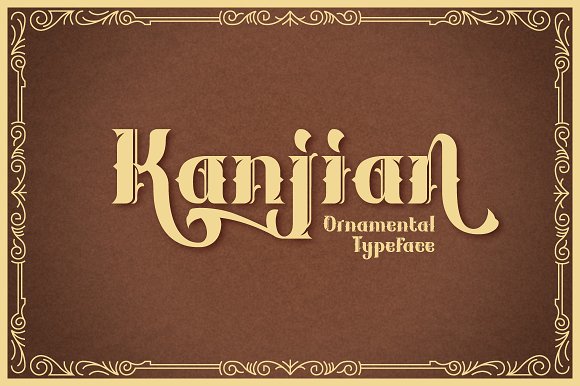
Kanjian: An Ornamental Font for Display Use
When you first encounter Kanjian, the immediate impression is one of character. This ornamental font, created by the Arterfak Project, carries a distinct personality that sets it apart from more neutral typefaces. Its decorative forms and expressive shapes make it an obvious choice for headlines, logos, and other attention-grabbing applications. But like any tool with a strong voice, using it well requires more than just enthusiasm. Many people discover Kanjian, fall in love with its look, and then wonder why their projects don't feel polished. The problem is rarely the font itself. It is almost always how it is being used.
This article is written for anyone who is considering Kanjian for a project or has already downloaded it and wants better results. Whether you are a designer, a small business owner creating your own marketing materials, or a blogger looking for a distinctive header style, understanding the common mistakes around ornamental fonts will save you time, frustration, and mediocre outcomes. I will walk through the most frequent missteps, why they happen, and what to do instead. The goal is not to discourage you from using Kanjian. It is to help you use it in a way that makes your work look intentional and professional.
Treating an Ornamental Font Like a Workhorse
The most common mistake is expecting Kanjian to behave like a standard text font. People see its visual appeal and try to use it for everything—body paragraphs, captions, long product descriptions. This almost never works well. Ornamental fonts are designed for display purposes. They are meant to be seen in short bursts, not read at length. When you set a paragraph in Kanjian, readability suffers. The decorative details that look stunning in a headline become distracting noise when repeated line after line.
The corrective approach is simple but requires discipline. Reserve Kanjian for situations where impact matters more than endurance. Headlines, pull quotes, short announcements, logo text, and single words or short phrases are ideal. If you need to convey a longer message, pair Kanjian with a clean, readable companion font for the body copy. Your audience will appreciate the contrast, and the ornamental elements will retain their power because they appear sparingly.
Overlooking Spacing and Letterfit
Another issue that trips up even experienced users is neglecting to adjust tracking and letter-spacing. Kanjian, like many ornamental typefaces, often has generous or idiosyncratic letter shapes that can feel cramped or uneven at certain sizes. Default spacing is rarely optimized for every application. If you simply type a word and leave the spacing untouched, the result may look amateurish or hard to read.
Take the time to manually adjust letter-spacing, especially when the font is used at larger sizes. Negative tracking can make an ornamental font feel tighter and more cohesive, while a little extra space can enhance legibility in shorter text. The exact amount depends on your medium—print, web, or screen—and the specific characters you are using. A good habit is to zoom in and look at the negative space between letters. If you see awkward gaps or areas where forms collide uncomfortably, adjust until the rhythm feels balanced. This small step often transforms a project from good to exceptional.
Ignoring Context and Audience
Kanjian has a strong stylistic flavor. It is not neutral. That is its strength, but it also means it carries associations and emotional weight. One common oversight is failing to consider whether the font fits the message and the audience. For example, using Kanjian for a formal legal document or a medical website would feel mismatched. Its ornamental nature suggests creativity, tradition, craft, or even playfulness, depending on the specific variant you choose. If your content requires a tone of strict professionalism or clinical precision, Kanjian may work against you.
Before committing, ask yourself what feeling the font evokes in your specific context. Show it to a few people who represent your target audience and get their unfiltered reactions. If they describe it as elegant, artistic, or distinctive, you are likely on the right track. If they describe it as difficult to read, old-fashioned in a negative sense, or distracting, you may want to reconsider. The goal is alignment between visual style and message, not personal preference alone.
Misunderstanding Licensing and Usage Rights
A mistake that can have real consequences is assuming that because a font is freely available online, it carries no restrictions. Kanjian, like all fonts from the Arterfak Project, has specific licensing terms. Whether you are using it for a commercial project, a client website, a product label, or a printed brochure, you need to verify what is allowed. Some licenses permit personal use only, while others extend to commercial applications with or without attribution. Downloading a font from an unofficial source also increases the risk of incomplete or altered files, which can cause technical problems later.
Always check the official Arterfak Project page or the distribution platform where you obtained Kanjian. Read the license agreement carefully. If you are unsure about a particular use case, reach out to the foundry or the designer for clarification. This is not just a legal precaution. Using fonts correctly supports the creators who invest time and skill into making them. It also ensures you have access to updates, support, and the full character set.
Using Kanjian at the Wrong Size or Medium
Ornamental fonts are sensitive to size. At very small sizes, intricate details can become muddied or disappear entirely. At extremely large sizes, flaws or irregularities in the design may become more visible than intended. Many people pick a headline size arbitrarily or settle on a size that works for other fonts without testing how Kanjian behaves in that specific dimension.
Test Kanjian at the actual size it will be viewed. If it is for a web header, view it on multiple screen sizes and devices. If it is for print, print a sample at full scale. Pay attention to how thin strokes, serifs, or decorative flourishes render. If details break up or become hard to discern, adjust the size upward or choose a different weight if one is available. The same principle applies to the medium. A font that looks crisp on a backlit screen may appear heavier or softer on uncoated paper. Always test in the final medium before committing.
Neglecting Pairing and Hierarchy
Because Kanjian is so visually strong, pairing it with other typefaces requires careful thought. A common mistake is using two ornate or decorative fonts together. This creates visual noise and confuses the hierarchy. Another mistake is pairing Kanjian with a font that clashes in mood or period. For instance, a very modern, geometric sans-serif may feel jarring next to Kanjian’s ornamental curves, unless contrast is the deliberate goal.
For most projects, the best approach is to pair Kanjian with a simple, highly readable font that takes a secondary role. A classic serif or a neutral sans-serif often works well. The ornamental font becomes the star of the headline or accent, and the body font provides clarity and comfort. Avoid using more than two or three typefaces in a single project. Establish a clear hierarchy: the most important text uses Kanjian, and supporting text uses the companion font. This creates a visual structure that guides the reader naturally.
Overlooking the Importance of Whitespace
Ornamental fonts need room to breathe. One subtle mistake is crowding Kanjian with other design elements—images, borders, icons, or heavy backgrounds. The intricate letterforms need negative space around them to remain legible and impactful. If you place a Kanjian headline over a busy photograph or a textured pattern, the text can become difficult to read, and the decorative details get lost.
Give Kanjian generous padding. Use white space or a simple solid background behind the text. If you must place it over an image, ensure there is sufficient contrast, and consider adding a subtle text shadow or overlay. For printed materials, allow extra margin around ornamental headings. The same principle applies when combining Kanjian with other typography: keep the layout uncluttered. The font is already decorative. Let it perform without competition from other visual noise.
Expecting a Single Variant to Serve All Needs
Many ornamental fonts come in only one style or weight. Kanjian may offer limited variations compared to a full typeface family. A mistake is trying to force that single variant to function in multiple roles—heavy for a headline, light for a subhead, italic for an accent—when the design was never intended to carry those distinctions. This can lead to inconsistency or forced usage that feels awkward.
Work within the limitations of the font. If Kanjian only has one weight, do not try to simulate a lighter or heavier version by scaling or artificially altering it. Instead, accept that it will serve one role in your project and choose a complementary font for other roles. If you need multiple ornamental styles, consider using another variant from the Arterfak Project or a different font altogether. Versatility comes from a thoughtful system of typefaces, not from stretching a single font beyond its design.
Failing to Consider Readability for All Users
Decorative fonts can create accessibility challenges. A mistake that affects real people is assuming that if you can read it easily, everyone can. Visual impairments, screen readers, and different viewing conditions all affect how Kanjian is perceived. Ornamental fonts, by nature, sacrifice some legibility for aesthetic expression. That is fine for short display uses, but ignoring the needs of your audience is a missed opportunity to communicate effectively.
For web use, ensure that any text set in Kanjian is supplemented with proper HTML headings and alt text when appropriate. For critical information, avoid using ornamental fonts for anything that must be understood at a glance, such as navigation labels, instructions, or calls to action. Test your design with a color contrast checker and view it in grayscale to see if the text remains distinguishable. If possible, get feedback from users with different visual abilities. An inclusive design is a better design, and it does not require abandoning beautiful fonts—just using them thoughtfully.
Rushing the Decision Process
The final mistake is a common one across all creative work: choosing Kanjian too quickly without evaluating alternatives or testing it in context. Ornamental fonts are abundant, and even within the Arterfak Project, there may be other options that suit your project better. Downloading a font, dropping it into a design, and calling it done often leads to outcomes that feel underdeveloped.
Take a step back. Gather a short list of ornamental fonts that fit the mood you want. Test each one with your actual content, at your actual sizes, in your actual medium. Compare how they perform on readability, visual impact, and emotional tone. Kanjian may win, or you may discover another choice that works even better. The time invested upfront will save you from reworking your design later. When you do settle on Kanjian, you will do so with confidence, knowing it is the right tool for this specific job.
Using Kanjian effectively is not complicated, but it does require awareness. This font has a strong voice, and it deserves to be placed in settings where that voice can be heard clearly. By avoiding the common mistakes outlined here, you give yourself the best chance of creating work that looks intentional, communicates clearly, and makes the most of what this ornamental typeface offers. Whether you are designing a poster, a website header, a product package, or any other visual communication, the same principles apply. Choose deliberately. Test thoroughly. Pair thoughtfully. Respect the font’s nature, and it will reward you with results that stand out for the right reasons.