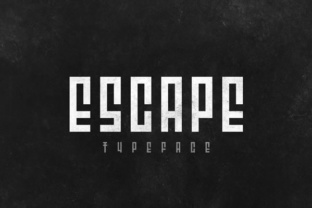
Escape: Evaluating a Bold, Modular Display Font for Design Projects
When selecting a typeface for a project that demands attention, the decision often comes down to balancing visual impact with practical flexibility. Escape is a display font that positions itself at this intersection, offering a raw, grid-based structure designed for manipulation. For designers working on posters, branding, or editorial layouts where a bold statement is required, understanding what this font offers—and where it might fall short—is essential for making an informed choice.
What Is Escape?
Escape is a display typeface defined by its modular construction and deliberately unpolished aesthetic. Unlike traditional fonts that rely on smooth curves and consistent stroke weights, Escape is built from geometric grid units. This gives each character a segmented, almost architectural appearance. The font’s design is intentionally raw, meaning it does not attempt to hide the underlying grid structure. Instead, it celebrates it, offering a look that feels both systematic and expressive.
The modular nature of Escape means that individual letterforms can be broken down into components. For a designer, this opens up possibilities for customization that are less straightforward with more conventional typefaces. The font is not intended for body text or extended reading; it is a display face, optimized for headline sizes and short, impactful messages.
Why Consider Using Escape?
Understanding the specific reasons that might lead a designer to choose Escape requires looking at the demands of certain visual communication contexts. Several factors make this font worth evaluating for specific projects.
Visual Impact and Memorability
In environments where a design must compete for attention—such as a crowded poster wall, a digital banner, or a product package—a typeface with a distinctive silhouette can make the difference between being noticed or ignored. Escape’s grid-based forms create shapes that are not easily mistaken for other fonts. This uniqueness can help a brand or message become more memorable.
Flexibility Through Modularity
The grid construction of Escape is not just an aesthetic choice; it is a functional feature. Because each letter is composed of discrete blocks, a designer can manipulate individual elements. You might stretch a character, remove a segment, or realign parts to create a custom variation that fits a specific layout. This level of control is particularly useful for logo design, where a bespoke letterform can reinforce brand identity.
Alignment with Contemporary Design Trends
Raw, unfinished, and system-based aesthetics have gained traction in recent years. From brutalism in web design to deconstructed typography in fashion and music, there is a market for typefaces that reject perfection in favor of honesty in construction. Escape fits naturally into this trend, offering a look that feels current without being derivative.
Benefits of Using Escape
When evaluating any design tool, it is useful to list the concrete advantages it brings to a project. Escape offers several clear benefits for those working in display typography.
- Strong readability at large sizes: The bold, blocky nature of the font ensures that words remain legible even when scaled up for banners or signage.
- Customization potential: The grid structure allows for easy modification. Designers can rearrange components to create unique letterforms or adjust spacing with precision.
- Distinctive character: Escape stands apart from more conventional display fonts. It can give a project an identity that is hard to replicate with other typefaces.
- Consistent visual system: Because all letters are built from the same grid, there is a coherent rhythm across the entire character set, which can be pleasing in a layout.
Tradeoffs and Considerations
No font is universally applicable, and Escape is no exception. Being aware of its limitations is crucial for deciding if it suits your specific needs.
Limited Legibility at Small Sizes
Due to its modular, segmented construction, Escape can become difficult to read when scaled down. The gaps between grid units may cause letters to break apart visually, making the text hard to parse. This font is best reserved for headlines, titles, or short phrases where the viewer will see it at a generous size.
Narrow Emotional Range
Escape conveys a specific mood: raw, industrial, systematic, and sometimes aggressive. If your project calls for warmth, elegance, or subtlety, this font may be a poor fit. The visual personality of Escape is strong, and it can overpower a design that requires a more neutral or versatile typeface.
Learning Curve for Effective Use
Taking full advantage of the modular features may require additional time and experimentation. Designers accustomed to standard fonts may need to adjust their workflow to accommodate the customizability of Escape. This is not a font that works well out of the box for every application; it rewards those who invest time in tweaking and adapting it.
Potential for Visual Monotony
Because all characters share the same grid logic, a paragraph set entirely in Escape can lack variation in texture. This uniformity might be desirable for some projects, but for others, it can feel repetitive. Pairing Escape with a contrasting typeface is often necessary to create visual hierarchy and interest.
Scenarios Where Escape Shines
Certain design contexts align naturally with the strengths of Escape. Recognizing these scenarios can help you decide when to reach for this font.
- Poster design for events: Concerts, exhibitions, and festivals often benefit from typefaces that grab attention and convey energy. Escape’s bold, raw appearance fits well with music, art, and cultural events.
- Branding for edgy or industrial brands: Companies in fashion, streetwear, or technology that want to project a modern, unpolished identity may find Escape aligns with their visual language.
- Editorial headlines in magazines: For spreads that feature strong photography or illustration, a headline in Escape can provide a counterpoint to more organic visual elements.
- Logo design for startups or personal brands: The modular structure allows for custom lettering that can be made unique to a brand, which is a significant advantage when building a visual identity from scratch.
When Alternatives May Be Worth Considering
There are situations where another font might serve your project better than Escape. Being aware of these can prevent a mismatch between tool and task.
Projects Requiring Versatility Across Weights and Styles
Escape is a single-weight display font with a fixed aesthetic. If your project needs a type family with multiple weights, italics, or condensed versions, you will need to look elsewhere. Fonts like Futura, Helvetica Now Display, or Bebas Neue offer more flexibility for a range of applications while still providing strong display characteristics.
Environments Requiring Small Text Legibility
If your design includes subheadings, captions, or body copy in addition to headlines, Escape will not suffice. In such cases, pairing it with a clean sans-serif or legible serif for the smaller text is necessary. Alternatively, a unified type family that performs well across sizes may be a better investment.
When a More Polished or Neutral Look Is Required
For corporate communications, academic materials, or luxury branding, the raw, unfinished aesthetic of Escape may feel out of place. A more refined display font or a classic serif could better communicate the intended tone.
Practical Decision-Making Insights
Choosing a font like Escape involves weighing its distinctive strengths against its inherent limitations. Here are practical steps to help you determine whether it aligns with your project goals.
- Clarify the primary function of the typeface: Are you looking for a headline font, a logo base, or a full text solution? Escape is best used in focused, prominent roles. If it is meant to carry a large amount of text, consider whether its legibility at smaller sizes is adequate.
- Test at actual use sizes: Before committing, render headlines or titles at the size they will appear in the final design. Evaluate legibility, visual impact, and how the modular gaps behave. What looks compelling on a screen may not translate to print at a different scale.
- Assess the visual personality match: Write down three to five adjectives that describe the tone you want your design to convey. Compare them to the mood Escape projects. If they align, the font is a strong candidate. If there is a mismatch, look for an alternative that better matches your desired emotional register.
- Plan for customization: If you choose Escape, allocate time in your workflow to modify and adapt the letterforms as needed. The font’s true value emerges when you treat it as a starting point for custom typography.
- Consider pairing options: Identify a secondary typeface that can handle body copy, subheadings, or supporting text. A simple sans-serif or neutral serif often works well to balance the boldness of Escape.
Final Thoughts on Evaluating Escape
Escape is a specialized tool in the typographer’s arsenal. It offers a unique combination of modular structure, raw aesthetic, and customization potential that is well-suited for bold display work. However, it is not a universal solution. Its strengths are most apparent in large-format, attention-driven contexts, while its limitations become clear when versatility, small-scale legibility, or a neutral tone are required.
For designers who understand the tradeoffs and are willing to invest the time to manipulate the grid-based forms, Escape can be a powerful asset. For those seeking a broader, more conventional type family for varied use, alternatives may be more appropriate. The key lies in matching the font’s character to the specific demands of your project, rather than forcing it into a role it was not designed to fill.