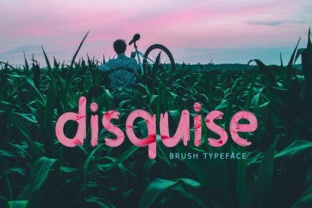
Disquise: Handwritten Brush Font for Bold Design Statements
Typography has a way of setting a mood before a single word is read. The curve of a letter, the weight of a stroke, the texture of ink on paper—all of it communicates something beyond the literal meaning of the text. That is exactly where Disquise steps in. Created by ChekArt, this handwritten brush font carries the energy of a hand-painted sign, the looseness of calligraphy, and the confidence of a deliberate mark. It is not a font that tries to be invisible. It is a font that wants to be seen.
Disquise is a display typeface built for moments that demand attention. Its brushstrokes feel natural and slightly unpredictable, which gives every word a human quality. In a world saturated with clean, mechanical type, that imperfection is what makes people stop and look. Whether you are designing a product label, crafting a social media graphic, or laying out a magazine spread, Disquise brings a tactile warmth that purely digital fonts often lack.
What Makes Disquise Stand Out
The first thing you notice about Disquise is the texture. Each letterform carries the faint grain and uneven pressure of a real brush. This is not a sterile vector font with perfect curves. It has personality. The ascenders rise with a slight flick, the descenders taper naturally, and the overall rhythm feels like someone wrote it by hand in a single confident pass.
ChekArt designed Disquise with versatility in mind. The uppercase characters carry a bold, authoritative weight, while the lowercase feels more conversational and approachable. This dual personality means you can use the same font for a heroic headline and a supporting subheading without losing coherence. The brush texture remains consistent across both cases, so your design maintains a unified handmade aesthetic.
Another strength is the font's readability at larger sizes. Display fonts often sacrifice legibility for flair, but Disquise strikes a reasonable balance. The letterforms remain distinct even when stacked or tightly kerned, which is critical for packaging and banner applications where space is limited.
Where Disquise Shines in Real Projects
Disquise is a display font first and foremost, which means it performs best when you give it room to breathe. Here are some of the most effective applications based on real-world creative work.
Packaging and Product Labels
Packaging is one of the most competitive visual spaces. A product needs to communicate its identity in a fraction of a second. Disquise works particularly well for artisanal food products, craft beverages, skincare lines, and handmade goods. The brush texture suggests craftsmanship and authenticity—two qualities that resonate with consumers looking for something genuine.
For example, a small-batch hot sauce brand could use Disquise for the product name on the front label, paired with a clean sans-serif for the ingredients list. The contrast between the rough brush letters and the tidy supporting type creates visual interest without confusion. Similarly, a ceramicist selling handmade mugs might use Disquise on a hang tag or sticker to reinforce the handcrafted nature of the product.
Headlines and Editorial Layouts
Magazines, blogs, and digital publications often use display fonts to anchor their most important content. Disquise works well for section headers, pull quotes, and feature article titles. Because the font carries a slightly unpredictable rhythm, it draws the eye without needing extra decoration. A simple black word set in Disquise on a light background is often enough to create a strong focal point.
For lifestyle or creative magazines, Disquise can help establish a tone that feels personal and unpolished in a deliberate way. It suggests that the content inside is not corporate or distant, but written by real people with something to say.
Banners and Signage
Banners need to be readable from a distance, but they also benefit from personality. Disquise holds up well at large sizes because the brush strokes are bold and the letter spacing remains open. Whether you are designing a banner for a market stall, an event backdrop, or a promotional email header, Disquise brings a handmade warmth that standard display fonts cannot match.
One practical consideration for banners is contrast. Because Disquise has textured edges, it pairs best with solid backgrounds rather than busy patterns. A white or cream background with dark ink letters gives the font the clarity it needs to read well from several feet away.
Social Media Graphics and Digital Ads
Social media feeds are crowded with polished, templated content. A graphic that uses Disquise stands out because it feels less like a template and more like a hand-painted sign. It works especially well for quotes, announcements, product launches, and seasonal promotions. The font's organic quality pairs nicely with photography that features natural light, textures, or candid moments.
For Instagram stories, short headlines in Disquise can be layered over video clips or still images. The brush texture reads clearly on mobile screens, and the informal character of the font fits the conversational tone of platforms like Instagram and Pinterest.
Adapting Disquise for Different Audiences and Goals
Different projects require different tones, and Disquise is flexible enough to accommodate several. Here is how you can adapt it depending on who you are trying to reach.
For Small Business Owners and Entrepreneurs
If you run a small business, your brand identity needs to communicate trust and personality without a big budget. Disquise gives you a professional-grade display font that looks custom without the cost of a bespoke typeface. Use it on your website hero section, your product labels, and your promotional materials. Because the font is distinctive, it helps your brand become recognizable across different touchpoints.
A practical recommendation: pair Disquise with a simple sans-serif like Open Sans or Montserrat for body text. This combination keeps your headlines expressive and your reading content clear. Consistency across your packaging, website, and social media will reinforce your brand without requiring a full design system.
For Designers and Freelancers
Disquise is a useful addition to any designer's toolkit because it fills a specific niche. It is not a workhorse text font, but it is a reliable display option for projects that need a human touch. Freelancers working with clients in food, beauty, lifestyle, and craft industries will find plenty of opportunities to use it.
When presenting mockups to clients, show Disquise in context rather than isolated on a font specimen page. Place it on a product shot, a storefront sign, or a magazine cover. Clients respond better to type when they see it solving a real visual problem. Disquise's brush texture often sparks conversations about brand personality and material choices, which can lead to more thoughtful design decisions.
For Educators and Hobbyists
Even if you are not a professional designer, Disquise can elevate your projects. Teachers creating classroom posters, hobbyists designing event invitations, or bloggers crafting featured images will find the font easy to work with. Because it carries so much personality on its own, you do not need to add many extra design elements. A single word set in Disquise on a clean background often looks complete.
For scrapbooking, journaling, or personal projects, Disquise can mimic the look of hand-lettering without requiring hours of practice. Print it out and combine it with actual handwriting, stamps, or watercolor accents for a layered, authentic feel.
Practical Tips for Using Disquise Effectively
Getting the most out of a brush font like Disquise requires a few thoughtful choices. Here are some guidelines that will keep your results clear, organized, and audience-friendly.
Watch Your Spacing
Display fonts often benefit from generous letter spacing, especially in all-caps settings. With Disquise, try increasing the tracking slightly when using uppercase to prevent the brush strokes from feeling cramped. For lowercase settings, the default spacing usually works well, but test it at your intended size before finalizing.
Limit the Number of Fonts
Disquise already carries strong visual weight. Using too many additional fonts in the same composition can create clutter. Stick to one or two typefaces total: Disquise for headlines and key words, and a neutral sans-serif for everything else. This approach keeps the focus on the brush texture without competing voices.
Choose Backgrounds That Complement the Texture
Because Disquise has a rough, inky quality, it pairs best with backgrounds that feel natural or tactile. Think paper textures, subtle gradients, solid colors with a bit of grain, or photographs with soft focus. Avoid backgrounds that are too busy or high-contrast patterns, as they can interfere with the readability of the brush strokes.
Use Hierarchy to Guide the Reader
When using Disquise in a layout with multiple text elements, establish a clear hierarchy. The most important word or phrase should be the largest and boldest. Supporting information can be smaller, set in lowercase, or paired with a secondary font. This structure helps the reader understand what to look at first without feeling overwhelmed by the font's expressive nature.
Creative Project Ideas to Try with Disquise
Sometimes the best way to understand a font is to use it in a real project. Here are a few ideas that showcase Disquise's strengths across different formats.
- Brand a small-batch product: Design a label for a fictional or real product such as honey, soap, or coffee. Use Disquise for the product name and a clean sans-serif for the description. Print it and photograph it on a wooden table to see how the texture translates to physical media.
- Create a set of quote cards: Choose five short quotes and set each one in Disquise at a different scale. Arrange them on a poster or Instagram carousel. Notice how the font's personality changes with size and letter case choices.
- Design a market stall banner: Use Disquise for the stall name, then add a short tagline in a supporting sans-serif. Mock it up on a fabric banner or chalkboard sign to preview how it works in a real-world retail context.
- Build a mood board: Combine Disquise with textures like kraft paper, linen, or weathered wood. Add photographs of hand-painted signage or brush lettering. This exercise helps you see where the font fits naturally within a broader visual aesthetic.
- Experiment with color: Try Disquise in unexpected colors like deep burgundy, mustard yellow, or muted teal. The brush texture responds well to earthy and muted palettes, which reinforce the handmade quality of the font.
Keeping Results Clear and Consistent
Disquise is expressive, but expressive does not have to mean chaotic. The key to using it well is restraint. Use it sparingly, let it lead the composition, and give it space. When every element in a design tries to shout, nothing gets heard. When one element stands out—especially one with as much texture and character as Disquise—the message becomes memorable.
Consistency also matters across a brand or project. If you use Disquise for headlines on your website, consider using it for headlines on your packaging and social media as well. That repetition builds recognition. But avoid using it for long body text, where its display qualities become a readability challenge. Respect the font's intended role, and it will reward you with designs that feel cohesive and intentional.
Why Disquise Belongs in Your Toolkit
Disquise is more than a decorative typeface. It is a tool for creating visual warmth, authenticity, and emphasis. In a creative landscape where so much communication happens through screens, a font that looks handwritten and imperfect offers a rare connection to the physical world. It reminds viewers that a real person made this, that care went into the details, and that the message matters enough to be presented with character.
Whether you are launching a brand, designing a publication, or simply exploring new creative directions, Disquise gives you a way to speak with a voice that feels both bold and human. Let the brush do the talking, and keep everything else quiet enough to listen.