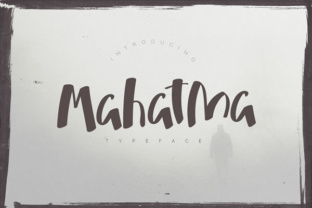
Mahatma: A Playful Font for Real Projects
You’ve probably scrolled past dozens of fonts today without giving them a second thought. Most typefaces are designed to be invisible—to carry words without drawing attention to themselves. But sometimes you want a font that does the opposite. You want one that adds a little bounce, a little personality, something that makes people stop and smile. That’s exactly where Mahatma comes in. Created by Pere Esquerrà, this playful typeface isn’t trying to shout at you. It’s more like a friendly wave from across the room.
Mahatma walks a fine line. It’s whimsical without being childish, distinctive without being hard to read. That balance makes it surprisingly versatile. Whether you’re designing a poster for a local event, crafting a social media post that needs to stand out, or putting together a set of flashcards for your kids, this font can bring a lighthearted energy that many standard fonts lack. Let’s talk about where, when, and why you might actually use it.
What Makes Mahatma Different?
Before diving into use cases, it helps to understand what Mahatma actually looks like. The font has irregular shapes, slightly uneven baselines, and a hand-drawn feel. Letters lean into their own quirks—some curves are softer, some strokes are thicker. It’s not a polished, geometric sans-serif, and it’s not trying to be. That roughness is the point. It feels human. It feels like someone sat down with a marker and sketched out each character with care.
Because of that handmade quality, Mahatma works best in situations where you want to convey warmth, creativity, or a sense of play. It doesn’t replace a clean body text font like Open Sans or Merriweather. But for headlines, subheadings, short callouts, and display use, it brings a ton of character. If you’ve ever felt like your designs look too corporate or sterile, Mahatma can help loosen things up.
Where Mahatma Shines: Real-World Scenarios
The real question isn’t “Is Mahatma a good font?”—it’s “Where does Mahatma actually fit into my workflow?” Below are several realistic scenarios across different roles and industries. These aren’t hypotheticals; they’re based on how people actually use playful typefaces in day-to-day projects.
For Bloggers and Content Creators: Adding Personality to Headlines
If you run a blog about parenting, travel, crafting, or even personal finance, you know that first impressions matter. Your headline is often the first thing a reader sees on social media or in their feed. A standard sans-serif might feel too stiff for a post titled “How We Turned Our Backyard into a Mini Playground.” Mahatma, on the other hand, immediately signals that the content is lighthearted and approachable. Pair it with a simple, legible body font, and your blog posts will feel cohesive yet lively.
Beyond headlines, try using Mahatma for pull quotes, section titles, or even the byline. It gives your brand a consistent voice—friendly, human, and a little bit quirky. Readers start to associate that look with your style, which helps with recognition over time.
Small Business Owners: Standout Signage and Social Media
Small businesses often compete with larger companies that have professional design teams and big budgets. Your advantage is personality. Whether you run a coffee shop, a boutique bakery, or a local cleaning service, Mahatma can help your marketing materials feel less generic. Imagine a chalkboard-style menu where the daily specials are written in a playful font. That handcrafted vibe invites people to look closer.
For social media, Mahatma works great on Instagram stories and posts announcing sales, new arrivals, or behind-the-scenes moments. It doesn’t try to be sleek or modern—it tries to be friendly. And friendly gets engagement. Customers are more likely to comment or share something that feels personal rather than templated.
Educators and Hobbyists: Engaging Worksheets and Printables
Teachers, tutors, and homeschooling parents are constantly looking for ways to make learning materials more engaging. Standard fonts like Arial or Times New Roman can feel like homework before the student even reads the first word. Mahatma’s playful shapes can transform a vocabulary worksheet into something that feels like a game. Use it for the title, the instructions, or the example sentences. Kids respond positively to visual variety, and a font that feels less “official” can reduce the intimidation factor.
Hobbyists who create printable planners, coloring pages, or party invitations will also find Mahatma useful. If you’re making a set of recipe cards for a family reunion or a gift tag for a handmade present, the font adds that extra touch of care. It suggests time and attention, even if you’re just printing from your home computer.
Freelancers and Marketers: Memorable Promotional Materials
Freelancers in creative fields—graphic design, illustration, photography—often need to present their own work in a way that reflects their style. Mahatma can be part of a personal brand identity. Use it in your portfolio website headings, on your business cards, or in the email newsletter you send to past clients. It tells potential clients: “I’m not a cookie-cutter designer. I bring personality to every project.”
Marketers running campaigns for products aimed at families, kids, or creative professionals can leverage Mahatma to stand out. A playful font in a Facebook ad can stop the scroll. For email marketing, a subject line paired with a preheader in a unique font (rendered as an image for compatibility) adds a layer of visual interest before the reader even opens the message.
Publishers: Children’s Books and Storytelling
For independent authors and small publishers focusing on children’s literature, Mahatma is a natural fit. Picture books, early readers, and activity books all benefit from type that matches the tone of the story. A story about a wandering bear or a mischievous cat feels more authentic when the text itself has a playful edge. Mahatma can work for the main text if the book is short, but it’s especially effective for chapter headings, character speech bubbles, or the title page.
Even for adults, a newsletter or a zine that aims for a casual, heartfelt tone can use Mahatma to break away from the polished uniformity of mass-produced magazines. It signals that the content is made by people, not corporations.
What to Consider Before Using Mahatma
Mahatma is a tool, and like any tool, it works best when used deliberately. Here are a few things to keep in mind before you download it and go wild.
- Readability at small sizes. Because of its irregular letterforms, Mahatma can be harder to read in small point sizes. Stick to 14pt or larger for body text if you must use it that way, but it really shines at 24pt and above. For long paragraphs, pair Mahatma with a clean sans-serif or serif body font.
- Use it sparingly. Too much of a playful font can feel noisy. Reserve Mahatma for headlines, short messages, and accent elements. A little goes a long way toward creating that friendly impression without overwhelming the viewer.
- Check the license. If you’re using Mahatma in commercial projects—logos, product packaging, paid advertising—make sure you have the appropriate license. Many fonts have different tiers for personal and commercial use. Pere Esquerrà’s licensing terms are usually fair, but always verify before publishing.
- Combine it wisely. Mahatma pairs well with simple neutral fonts like Lato, Roboto, or Source Sans Pro. Avoid pairing it with another decorative font. The contrast between a playful display font and a clean body font creates visual hierarchy and makes both work better.
- Consider your audience. If your project targets a very formal industry (law, finance, healthcare), Mahatma probably isn’t the right choice. But for creative agencies, lifestyle brands, educational materials, and personal projects, it’s an asset.
How Different Users Can Benefit
The benefits of Mahatma go beyond just “looking nice.” When you choose a font that fits the mood of your message, you make your content easier to process and more enjoyable to read. Here’s how that plays out for different people.
Entrepreneurs launching a product for parents or kids can use Mahatma on packaging to signal that the item is fun and safe. A playful font on a toy box or a snack wrapper tells the buyer that the product is designed with joy in mind, not just utility. That emotional connection can influence purchasing decisions, especially in crowded markets.
Hobbyists who make digital art, scrapbook layouts, or handmade cards will appreciate the organic feel. Unlike many display fonts that look too digital or sterile, Mahatma keeps a handcrafted spirit. It pairs beautifully with watercolor backgrounds, sketchy illustrations, or even simple black-and-white layouts.
Bloggers and freelance writers can use Mahatma to build a cohesive brand across their website and social channels. A consistent visual tone helps readers remember you. When they see that same playful headline style on your Instagram post and your blog, they know it’s you before they even check the username. That kind of recognition is gold for building a loyal audience.
Educators can reduce the fear factor in learning materials. A worksheet with a playful title font feels like a game, not a test. Students, especially younger ones, are more willing to engage with content that doesn’t look like a chore. Mahatma helps create that approachable atmosphere without sacrificing clarity.
Connecting Features to Real Outcomes
Let’s tie Mahatma’s specific qualities to outcomes you can expect. The irregular shape of each letter means no two words look exactly the same. That imperfection makes your design feel original and less templated. In a world where so many templates and AI-generated designs look identical, a hand-drawn font is a simple way to stand out.
The playful baseline—letters that don’t sit perfectly straight—creates a sense of movement. Viewers’ eyes bounce along the text, which can make them more likely to read the entire headline. That’s especially important for marketing materials where you have only a few seconds to grab attention.
Because Mahatma isn’t trying to be serious, it also lowers the perceived barrier between creator and audience. A font that looks like someone drew it feels approachable. People are more inclined to trust a small business that uses such a font, because it feels authentic. It suggests the maker put real thought into the design, not just copied a corporate brand guide.
Finally, using Mahatma can save you time. Instead of spending hours trying to make a standard font look interesting with effects, shadows, and outlines, you can simply let Mahatma do the work. Its natural character adds visual interest without extra effort. For anyone juggling multiple projects—freelancers, small business owners, busy parents—that time savings is a real benefit.
Mahatma is not going to replace every font in your collection. It doesn’t need to. It’s a specialized tool designed for a specific job: bringing personality, warmth, and a touch of whimsy to your work. When you use it in the right places—headlines that need to pop, labels that need to charm, materials that need to engage—it does that job exceptionally well. So next time you’re staring at a blank page or a draft that feels too flat, try swapping in Mahatma for your main heading. You might be surprised how much difference one playful font can make.