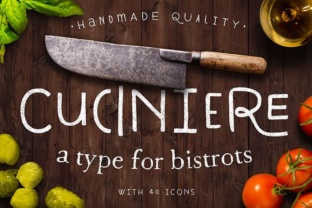
Cuciniere: A Culinary Font for Food Lovers and Branding
Choosing the right typeface for a food-related project can be surprisingly challenging. The font needs to convey personality without overpowering the content, remain readable at various sizes, and align with the specific tone of a menu, blog, or brand. Cuciniere positions itself as a dedicated culinary typeface, offering a hand-written aesthetic with extensive customization options. This article provides an objective evaluation of Cuciniere, exploring its features, potential tradeoffs, and the scenarios where it may be a strong fit for your work. Whether you are designing a restaurant menu, building a food blog, or creating recipe cards, understanding what Cuciniere offers will help you determine if it aligns with your project goals.
What Is Cuciniere?
Cuciniere is a display typeface created specifically for food-related design. It combines all-caps characters with a select set of lowercase letters, giving it a distinctive, elegant hand-written feel. The font is designed to evoke the warmth and personal touch often associated with hand-lettered menus and recipe collections. One of its core selling points is high customizability, achieved through stylistic alternates that include wide, condensed, and lowercase variants, as well as typographic ligatures. Additionally, the font package includes a bonus dingbats font featuring 40 hand-drawn icons related to food—think slow food, desserts, wines, pasta, and similar culinary themes. These icons are designed to match the Cuciniere typeface, providing a cohesive visual toolkit for designers.
1. Customizable Stylistic Alternates
The most notable feature of Cuciniere is its range of stylistic alternates. Instead of offering a single, fixed style, the font allows users to swap between wide, condensed, and lowercase character sets, along with ligatures. This flexibility means you can adjust the typeface to suit different layouts and tones. For instance, the wide alternates can create a spacious, relaxed feel ideal for headers, while condensed versions work well for subheadings or captions where space is limited. The inclusion of lowercase alternates adds versatility, enabling the font to mimic a more natural hand-written flow rather than staying strictly all-capitals.
2. Hand-Written Aesthetic
Cuciniere deliberately mimics the look of hand lettering. For designers seeking a personal, approachable style—often seen in artisanal food branding, farm-to-table menus, or home-style recipe blogs—this hand-drawn quality helps humanize the design. It sidesteps the overly polished look of many digital fonts, making it suitable for projects where authenticity and warmth are priorities.
3. Integrated Dingbats Icons
The included dingbats font adds practical value. With 40 hand-drawn icons covering common food categories, designers can use these graphics as bullet points, decorative elements, or visual highlights without sourcing separate icon sets. Since the icons share the same drawing style as the typeface, the overall visual consistency is maintained. This is particularly helpful for menu design, where icons for wine, pasta, or dessert can quickly convey categories to diners.
Potential Tradeoffs and Considerations
No font is perfect for every situation, and Cuciniere comes with its own set of limitations that may affect your decision.
1. All-Caps Dominance
While Cuciniere includes some lowercase characters, its default state is largely all-capitals. This can be a strength for headings and short blocks of text, but extended reading in all-caps can fatigue the eye. If your project involves longer paragraphs—such as recipe instructions or blog body copy—you may find the all-caps format inappropriate. The lowercase alternates help, but they are not fully featured lowercase sets; the font still leans heavily toward uppercase display.
2. Limited Character Set
Given its specialized culinary focus, Cuciniere may not offer the full range of characters found in standard typefaces. If you need extensive language support (accents, non-Latin scripts, or special punctuation), you should check the specimen file thoroughly. The font is designed for display and decorative use, not for comprehensive text setting.
3. Licensing and Usage Rights
As with any commercial font, licensing terms vary. Cuciniere is sold through typical font marketplaces, and you must verify whether the license covers your intended use—be it desktop publishing, web embedding, app integration, or commercial branding. Some licenses may restrict the number of users or projects. Always review the end-user license agreement before purchasing.
4. Readability at Small Sizes
The hand-written nature of Cuciniere means it may lose clarity when used at very small sizes. Fine details like swashes or varying stroke widths can become muddy. It is best suited for medium to large display sizes, such as titles, menu sections, or logo text. For body text or fine print, you will likely need a more legible secondary font.
When Cuciniere Shines: Strong Fit Scenarios
Cuciniere is most effective in contexts where a distinct, food-centric personality is desired. Here are situations where it performs well:
- Restaurant Menus: Menu design benefits greatly from thematic typefaces. Cuciniere’s warm, hand-written style can differentiate a menu from generic typography, especially for upscale or artisanal eateries. The dingbats icons allow quick categorization of dishes or beverages.
- Food Blogs and Recipe Cards: Bloggers often want a font that feels personal and inviting. Cuciniere can be used for headings, recipe titles, or ingredient lists, adding a handmade touch that complements food photography.
- Branding for Small Food Businesses: Bakeries, farm stands, craft beverage companies, or specialty food makers can use Cuciniere in logos, packaging, and promotional materials to convey authenticity and care.
- Cookbooks and Editorial Design: For cookbook covers, chapter headings, or pull quotes, Cuciniere provides a decorative element that ties into the culinary theme without overwhelming the layout.
- Event Materials (Dinners, Markets): Flyers, posters, and signage for food festivals, cooking classes, or tasting events can adopt Cuciniere to quickly signal the theme.
When Alternatives May Be Worth Considering
Despite its strengths, Cuciniere is not the best fit for every project. You might consider other fonts if:
- You need a full script or serif typeface: Cuciniere is a display font that mixes all-caps with some lowercase; it is not a true script font nor a traditional serif. If your project requires flowing cursive or classic serif legibility, look for dedicated script or text typefaces.
- Your content is international or multilingual: Cuciniere’s character set may lack accented characters or non-English glyphs. If you need to set text in multiple languages, verify support or use a more comprehensive font.
- You require extensive lowercase for readability: For projects with substantial body copy, a standard lowercase typeface (serif or sans-serif) will be far more readable. Cuciniere is best reserved for display purposes only.
- Your brand is modern or minimalist: Cuciniere’s hand-written, ornamental style clashes with clean, modern aesthetics. For brands emphasizing sleekness or minimalism, a simple sans-serif would be more appropriate.
- You need web performance: If you are embedding the font on a website, consider loading times. The stylistic alternates and dingbats increase the file size. For performance-critical sites, test the impact.
Practical Decision-Making Insights
To determine whether Cuciniere aligns with your needs, evaluate the following factors:
- Project Typography Hierarchy: Identify where Cuciniere would fit. Is it for headings only, or do you plan to use it for short phrases? If the answer includes body text, reconsider. Pair Cuciniere with a neutral, legible font for body copy (e.g., a simple serif like Lora or a sans-serif like Open Sans).
- Visual Consistency: The dingbats icons are a strong asset if you want a cohesive food theme. Check the specimen file to see all 40 icons and assess whether they match the specific items you need.
- Brand Tone: Cuciniere conveys warmth, tradition, and handcrafted quality. If your brand voice is contemporary, edgy, or highly formal, this font may not be appropriate.
- Licensing Budget: Compare the cost of Cuciniere with other display fonts that offer similar hand-written effects. Some fonts have free or open-source alternatives, but they may lack the stylistic alternates and icon set.
- Testing at Intended Sizes: Before committing, download the free trial version (if available) and test the font at the exact sizes you plan to use. Check readability on screen and in print. Pay attention to how the stylistic alternates work in your design software.
How to Use Cuciniere Effectively
If you decide Cuciniere is a good fit, maximize its potential with these practical tips:
- Combine with a neutral body font: Use a clean sans-serif or lightweight serif for instructions or descriptions to balance the ornate display feel.
- Leverage the alternates: Experiment with wide, condensed, and lowercase versions within the same design. For example, use wide for main headings, condensed for subheadings, and lowercase for a softer look in ingredient lists.
- Limit use to key elements: Avoid overusing the hand-written style. A little goes a long way—apply Cuciniere to titles, headings, or section dividers, but keep the rest simple.
- Icon integration: Use the dingbats to replace bullet points or as decorative separators. Ensure the icon scale harmonizes with the text size.
- Check contrast: Because stroke widths are irregular, ensure sufficient contrast with the background. Dark text on light backgrounds works best.
Conclusion: Is Cuciniere Right for You?
Cuciniere offers a specialized tool for designers working on food-focused projects. Its hand-written feel, customizable alternates, and matching icon set provide a cohesive visual language that can elevate menus, blogs, and branding. However, it is not a universal font—its all-caps dominance, limited character set, and display-only nature mean it requires careful pairing with other typefaces and cannot handle long-form text. For projects that prioritize warmth, authenticity, and a food-centric identity, Cuciniere is a strong candidate. For those needing strict readability, multilingual support, or modern minimalism, alternatives may serve you better.
Ultimately, the best decision comes from testing the font in your specific context, evaluating its tradeoffs, and ensuring it complements rather than overwhelms your content. By doing so, you can confidently choose whether Cuciniere aligns with your creative and practical goals.