Amsterdam: A Signature Font Inspired by Modern Photography
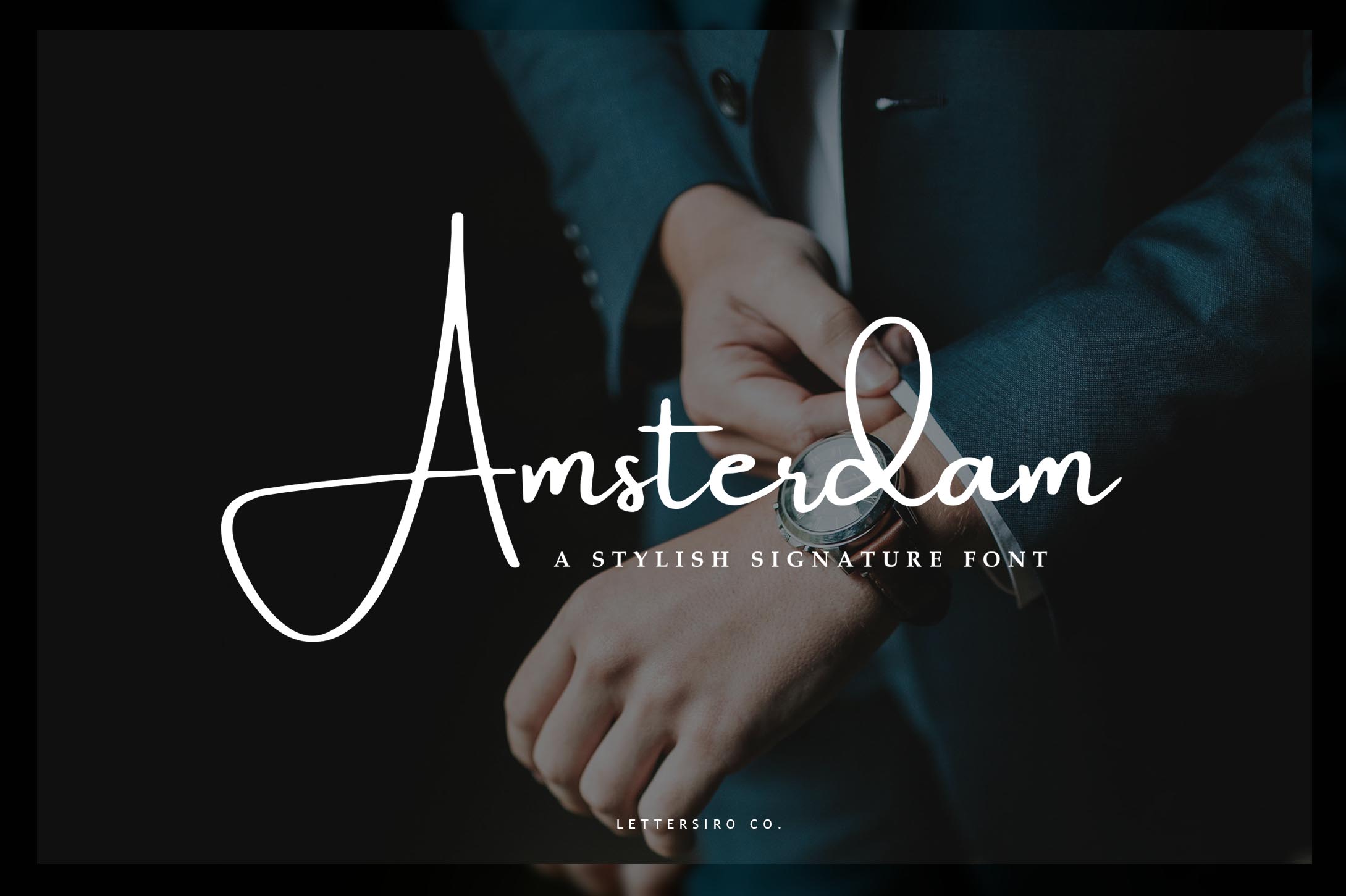
Typography can feel invisible until a particular typeface stops you mid-scroll. Amsterdam is one of those fonts. It was designed as a stylish signature font, and its inspiration comes directly from modern photography. The curves feel deliberate without being fussy, and the letterforms carry a sense of motion that mirrors how a camera captures light and shadow. Whether you are watermarking your latest portfolio image or building a brand identity from scratch, Amsterdam offers a voice that feels both personal and polished.
What makes Amsterdam stand out is its ability to bridge the gap between handwritten authenticity and professional design. It does not try to mimic casual handwriting. Instead, it elevates the signature concept into something you would see on a gallery print, a premium product label, or a creative director's business card. The strokes are confident, the spacing is thoughtful, and the overall impression is one of understated elegance. For anyone who works with visual content, Amsterdam opens a door to adding a human touch without sacrificing clarity.
What Amsterdam Brings to Your Projects
At its core, Amsterdam is a tool for making things yours. Signatures carry personal meaning. They authenticate, they claim ownership, and they carry a sense of identity. Amsterdam captures that spirit and translates it into a digital typeface that you can use across any medium. The font works especially well at medium to large sizes, where the details of each character become noticeable. The subtle swashes and flowing connections give it a rhythm that feels natural rather than mechanical.
For creators who want to protect their visual work, Amsterdam serves as an elegant watermark. A watermark is often an interruption, but when it uses a font like Amsterdam, it becomes part of the composition. The font does not shout for attention. It sits gracefully over an image, letting the photograph breathe while still marking it as yours. This balance between presence and restraint is what makes Amsterdam useful beyond just aesthetics.
- Watermarking photos with a signature that looks handcrafted
- Branding materials like business cards, logos, and social media headers
- Personal projects such as journals, invitations, or custom prints
- Digital content including video titles, blog headers, and email signatures
The versatility of Amsterdam means it can move from a photographer's watermark to an entrepreneur's logo without feeling out of place. That flexibility is rare among signature fonts, many of which lean too far into ornamental territory or become illegible at small sizes. Amsterdam keeps its readability intact while maintaining a distinct personality.
Why Photographers and Creators Reach for This Font
If you spend time capturing images, you already know how important presentation is. The difference between a good photo and a great one often comes down to the finishing touches. Amsterdam fits naturally into that workflow. A photographer who shares work online can place an Amsterdam watermark in the corner of an image without distracting from the subject. The font's modern inspiration aligns with contemporary photography styles, making it a cohesive addition rather than an afterthought.
For portrait photographers, using Amsterdam as a signature watermark reinforces the personal nature of their work. Clients see the name presented with care, and that subtle detail builds trust. Wedding photographers, for example, often deliver galleries that include a signature mark on each image. Amsterdam offers a way to do that without the stiffness of traditional serif or sans-serif fonts. The handwritten quality feels warm and approachable, which resonates with clients looking for an emotional connection to their photos.
Fashion and product photographers may prefer Amsterdam for its sleek, modern silhouette. When used on editorial-style images, the font adds a layer of sophistication. It does not compete with the visual elements. Instead, it complements them, much like a well-chosen frame complements a painting. Creators working with black-and-white photography will find that Amsterdam's clean lines hold up well against high-contrast backgrounds, maintaining legibility without becoming harsh.
Social media content creators also benefit from the font's recognizability. Consistently using Amsterdam across Instagram posts, story highlights, and profile graphics creates a cohesive visual identity. Followers begin to associate that signature style with the creator, which strengthens brand recall over time. For influencers and educators who produce photo-based content, this kind of subtle branding can be more effective than large logos or text overlays.
How Entrepreneurs and Business Owners Use Amsterdam
Small business owners often juggle many roles, and design rarely gets the attention it deserves. Amsterdam simplifies one piece of that puzzle. Using a single signature font across business cards, invoice headers, website banners, and product packaging creates a unified brand presence without needing a full design system. The font's professional appearance helps entrepreneurs present themselves as established and detail-oriented, even when they are just starting out.
A freelance consultant might use Amsterdam for their email signature and proposal covers. The signature style adds a personal touch to client communications, which can help build rapport before the first meeting. A wedding planner could use Amsterdam on save-the-date cards or welcome signs, giving couples a preview of the elegant, curated experience they offer. A small bakery might print Amsterdam on cake tags or packaging stickers, turning every customer interaction into a branding opportunity.
For business owners who sell digital products, Amsterdam works well as part of a logo or watermark on preview images. Whether you are selling presets, templates, or online courses, the font communicates quality and care. Customers often judge a product by its presentation, and a consistent, well-chosen typeface signals that the same level of attention went into the product itself. That perception can influence purchasing decisions, especially in competitive markets like photography resources and creative education.
Cost is another practical consideration. Many business owners are cautious about spending on design assets. Amsterdam is available at various price points depending on the license, and compared to hiring a designer for custom branding, it offers a cost-effective alternative. The font also reduces the time spent experimenting with different typefaces. Once you commit to Amsterdam, you have a reliable option that works across most materials without needing constant adjustments.
Beginners Finding Their Way with Amsterdam
If you are new to typography or design, choosing a font can feel overwhelming. Amsterdam removes some of that uncertainty because it is designed for immediate use. You do not need to understand kerning, leading, or font pairing to make it look good. The font's natural rhythm and balanced proportions do most of the work for you. You can drop it into a photo editing app, a document, or a design tool, and it will already look intentional.
Beginners often worry about whether their work looks amateurish. Using Amsterdam on watermarks or branding materials adds a layer of polish that is hard to achieve with default system fonts. It signals that you put thought into your presentation, even if you are still learning the technical side of design. That confidence boost can encourage beginners to keep creating and sharing their work.
For hobbyists who take photos as a side passion, Amsterdam makes it easy to share images online with a consistent identity. You do not need a full brand guide or a graphic design degree. You just need the font and a simple watermarking process. Over time, that small habit builds a body of work that feels cohesive and personal. Hobbyists who later decide to turn their passion into a side business already have a foundation in place.
Learning value also matters for beginners. Working with Amsterdam can teach you how a single typeface affects the mood of a project. You can experiment with different background colors, opacities, and placements to see how the font interacts with images. These small experiments build intuition about design principles without requiring formal study. Amsterdam becomes a learning tool as much as a practical asset.
For Professionals Who Value Precision and Flexibility
Experienced designers, marketers, and creative directors approach fonts with a different set of expectations. You need reliability across formats, scalability across media, and enough character to make a project memorable without overwhelming it. Amsterdam meets those criteria. The font holds up in both digital and print applications, maintaining its crispness on screen and its elegance on paper.
Professionals often work with multiple typefaces in a single project. Amsterdam pairs well with clean sans-serif fonts for body text or with refined serifs for a more traditional contrast. Its signature style works best as an accent or display font, so you can use it for headlines, logos, or watermarks while keeping supporting text simple. This pairing flexibility makes Amsterdam a practical addition to a professional designer's toolkit rather than a novelty.
Speed is another priority for professionals. When you are producing content under tight deadlines, you do not have time to tweak a font until it works. Amsterdam comes ready. The character spacing is consistent, the ligatures flow naturally, and the overall design does not require manual adjustments for most standard uses. You can apply it and move on to the next task, confident that it will look right.
Reliability also extends to licensing. Professionals need to know that the fonts they use are cleared for commercial use. Amsterdam is available with standard commercial licenses, and some foundries offer extended licenses for broader applications like merchandise or broadcast. Checking the specific terms ensures you stay compliant, but the availability of clear licensing options means you can use Amsterdam in client work without legal concerns.
Educators and the Learning Side of Typography
Typography is a subject that deserves more attention in creative education. Amsterdam provides a practical example of how a modern signature font draws from visual culture. Educators teaching photography, graphic design, or branding can use Amsterdam as a case study in how typefaces carry meaning. Students can compare it to other signature fonts and discuss why certain letterforms feel more contemporary or more traditional.
In a classroom setting, Amsterdam works well for exercises on watermarking, branding, and visual identity. Students can create mock brands and apply Amsterdam across different materials, learning how consistency builds recognition. The font's clear personality makes it easy to analyze. Students can discuss what makes it feel photographic or modern, drawing direct connections between the font design and the visual culture it references.
For educators who create their own teaching materials, Amsterdam offers a way to make handouts, slide decks, and certificates feel more polished. A course completion certificate typeset in Amsterdam carries a sense of occasion. Lesson slides that use Amsterdam for titles feel more designed than default templates. These small touches model good design practice for students and show that attention to detail matters, even in everyday materials.
Is Amsterdam the Right Choice for Your Next Project
Deciding whether Amsterdam fits your needs comes down to matching the font's strengths with your goals. If you want a signature style that feels elegant, modern, and personal, Amsterdam is worth exploring. It works especially well when you need a visible mark that does not distract from the content it accompanies. Photographers, entrepreneurs, hobbyists, and professionals all find different aspects of the font useful, but the common thread is a desire for something that feels both polished and personal.
Consider the scale of your project. Amsterdam shines at medium to large sizes where the details of each letterform become visible. If you need a font for small body text or dense paragraphs, a simpler typeface will serve you better. Think about the medium as well. Amsterdam works beautifully on digital screens, in print, and on physical products, but testing it in your specific context is always a good idea. Download a trial version or use a type tester to see how it interacts with your images and layouts.
Your skill level does not limit what you can do with Amsterdam. Beginners will appreciate how easy it is to apply, while seasoned designers will value the font's flexibility and refined aesthetics. The font adapts to you, not the other way around. That accessibility is part of what makes Amsterdam a practical choice for such a wide range of users.
Ultimately, a font is a tool. Amsterdam is a well-crafted one, built with care and inspired by a visual world that values authenticity, clarity, and beauty. Whether you are watermarking your life's work or building a brand from the ground up, it invites you to leave your mark with intention.