Abigail Script: A Monoline Cursive Font Built for Authentic Handwritten Design
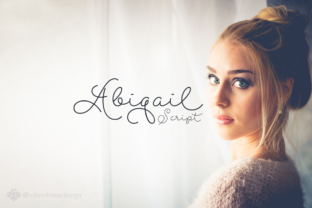
Handwritten fonts occupy a unique space in modern typography. They walk a fine line between readability and personality, between digital precision and the warmth of human stroke. Abigail Script is a monoline cursive typeface that leans heavily into that warmth while offering enough versatility to work across a surprising range of projects. At first glance, it looks like something you might scribble in a notebook. But beneath that casual surface lies a thoughtfully engineered font family with stylistic alternates, ligatures, positional forms, and even a set of ornamental glyphs tucked into the numeral slots. Understanding what Abigail Script actually offers, and where it fits best, can help you decide whether it is the right tool for your next design or branding project.
What Makes a Monoline Cursive Font Different
Not all cursive fonts are created equal, and the term monoline matters more than many people realize. A monoline font uses a consistent stroke width throughout every character. There is no thick-to-thin contrast, no calligraphic variation in pressure. This gives Abigail Script a clean, even appearance that feels contemporary rather than ornate. It mimics a felt-tip pen or a fine gel roller rather than a brush or a nib. That distinction immediately influences where the font works best. Because there is no dramatic variation in weight, the text remains readable at smaller sizes, and it does not demand as much white space around it as a high-contrast script would. This makes Abigail Script practical for everything from product packaging to social media overlays, where clarity cannot be sacrificed for style.
The monoline approach also lends itself well to digital-first work. Screens tend to flatten out subtle weight variations, but Abigail Script retains its intended shape because there is nothing to lose. Whether you are designing for a website header or a mobile app button, the letters hold their form. This reliability is one of the reasons why designers gravitate toward monoline scripts when they need a handwritten feel without the fragility that sometimes comes with more elaborate typefaces.
Stylistic Alternates and Ligatures: More Than Just Decoration
One of the most appealing features of Abigail Script is the inclusion of stylistic alternates for all uppercase letters, along with alternates for several lowercase characters. In practice, this means you can avoid the repetitive look that plagues many handwritten fonts. If you have ever used a script typeface that seemed to repeat the same letter shapes over and over, you already know how quickly that can undermine the illusion of natural handwriting. Abigail Script addresses that problem directly. By swapping in alternate glyphs, you can create a more organic rhythm across a word or a phrase. No two instances of the same letter need to look exactly the same, and that small variation makes a significant difference in how authentic the final result feels.
Ligatures add another layer of fluidity. In cursive writing, certain letter combinations flow together in ways that standard character spacing cannot replicate. Abigail Script includes ligatures that connect adjacent letters in a natural, unbroken stroke. This eliminates awkward gaps or abrupt jumps between characters. When you typeset a word like feeling or together, the ligatures help the letters blend into a continuous line of text. The result is smoother and more convincing than what you would get from a font that relies solely on standard kerning. For designers working on logos, quotes, or short headlines, these ligatures become an essential tool for achieving a polished, handmade look.
Positional forms further refine the experience. In many cursive fonts, a letter at the beginning of a word behaves differently than the same letter in the middle or at the end. Abigail Script accounts for this with positional alternatives that adjust the entry and exit strokes depending on where a character sits. This might sound like a small detail, but it is precisely the kind of nuance that separates a thoughtfully designed typeface from one that feels mechanical. When you typeset a full sentence, the positional forms help each letter connect naturally to its neighbors, preserving the flow from start to finish.
The Ornament System: Small Details with Big Impact
Perhaps the most unexpected feature of Abigail Script is its set of ornaments occupying the numeral positions one through nine. Instead of digits, you get decorative glyphs that are scaled and weighted to sit comfortably beneath words of roughly five to six characters in length. This is not an afterthought. The ornaments are designed to embed directly under shorter words, acting as subtle underlines, flourishes, or accents. They can be used to add visual interest to a heading, to separate sections of text, or to give a logo an extra touch of personality without introducing a second typeface or custom illustration.
The placement of these ornaments is deliberate. Because they replace the numerals, you can access them directly from the keyboard without digging through a glyph panel every time. If you need an actual number, you would need to switch fonts or use an alternate method, but for design work where numerals are rare, this trade-off makes sense. The ornaments are most effective when paired with short words, which is exactly where handwritten scripts tend to appear. A brand name, a product descriptor, or a tagline of four to six characters can sit above one of these ornaments and immediately feel more intentional. The ornament does not compete with the text. It supports it, anchoring the word visually and giving it a finished look.
For anyone working on packaging, labels, or social media graphics, this feature can save real time. Instead of manually drawing an underline or searching for a matching ornamental font, you have a cohesive decorative element built directly into the typeface. The consistency of line weight between the letterforms and the ornaments ensures that nothing looks mismatched. The entire composition stays unified.
Where Abigail Script Fits in Modern Design Workflows
Handwritten fonts have a reputation for being niche, but Abigail Script is versatile enough to serve multiple roles. In branding, it works well for businesses that want to communicate approachability or craftsmanship. A coffee shop, a handmade goods store, a children's book author, or a wedding planner could all use this font to reinforce a personal, human-centered identity. The monoline nature keeps it from feeling overly feminine or masculine, which gives it broader appeal than many scripts that lean heavily in one direction.
In digital design, Abigail Script performs well in hero headings, pull quotes, and call-to-action text. Because it remains readable at moderate sizes, it can also appear in body text for short passages, though it is best reserved for display purposes where the handwriting effect can be appreciated. Social media content benefits particularly from the alternates and ornaments. A single Instagram quote graphic can look completely different depending on which stylistic alternates you choose, and the ornaments provide a quick way to add a decorative border or divider without opening a separate design tool.
Print projects are another natural home for this font. Invitations, greeting cards, menus, and product labels all rely on typography to set a tone, and Abigail Script delivers a handwritten feel without requiring actual handwriting. For small businesses that produce their own marketing materials, having a font that looks this organic can elevate the entire brand without needing a professional lettering artist on retainer.
Practical Considerations Before Using Abigail Script
No typeface is perfect for every situation, and Abigail Script has a few limitations worth acknowledging. The ornament system replaces numerals, so if your project requires frequent numbers, you will need to plan around that. Some designers choose to use a complementary sans-serif font for numerical data, which can actually create an appealing contrast with the cursive letterforms. Others manually insert ornaments from the glyph panel only where desired, leaving standard numerals in place by switching fonts temporarily. Neither approach is difficult, but it is something to be aware of before you commit to the font for a data-heavy layout.
Legibility at very small sizes is another consideration. While the monoline construction helps, cursive scripts inherently require more recognition effort than simple sans-serif or serif fonts. For body text below twelve points, especially on screen, readers may struggle with longer words. Reserve Abigail Script for headlines, subheadings, and short bursts of text where the handwriting effect can be appreciated without causing fatigue.
Language support is also relevant. Abigail Script covers a standard Latin character set, which works well for English and many Western European languages. If your project requires extended Latin characters, Cyrillic, or non-Latin scripts, you will need to verify coverage or plan for fallback fonts. The stylistic alternates and ligatures are most effective in languages that follow familiar cursive patterns, so keep that in mind during the design phase.
Examples and Scenarios That Highlight the Font's Strengths
Imagine designing a logo for a boutique bakery called Brioche. The word is six characters long, which means it lands perfectly in the sweet spot for the ornamental underlines. You could typeset the name with stylistic alternates to avoid identical letter shapes, enable ligatures for seamless connections between the r-i and c-h pairs, and place ornament number three beneath it for a delicate underline that mirrors the stroke width of the text. The whole mark looks hand-drawn in minutes.
Consider a wedding invitation suite. The couple wants something personal but not overly ornate. Abigail Script can handle the couple's names in a large display size, with positional forms ensuring that the first and last letters connect naturally to the surrounding words. Ornaments can separate sections of the invitation, such as the date and venue, without requiring additional graphic elements. The monoline weight keeps everything consistent across printed pieces, from the main card to the RSVP insert.
For a social media manager creating weekly quote graphics, Abigail Script offers enough variety to keep the feed feeling fresh. By choosing different stylistic alternates for each post, the same typeface can produce noticeably different visual outcomes. The ornaments can serve as dividers between the quote and the attribution, or as subtle accents around the border. The font becomes a flexible system rather than a one-note solution.
Making the Most of a Handwritten Typeface
Abigail Script is not trying to be a workhorse font for long-form reading. It is a specialized tool for moments when you want text to feel personal, intentional, and human. The stylistic alternates, ligatures, positional forms, and ornaments all work together to create a cohesive system that mimics the natural variation of handwriting while remaining predictable enough to use professionally. For designers who work regularly with branding, packaging, invitations, or social media, it offers a practical shortcut to an authentic handwritten aesthetic without sacrificing control or consistency. Understanding what it does well, and where its limitations lie, allows you to deploy it with confidence in the projects where it will truly shine.